NVIDIA has agreed to acquire Hugging Face for $12.93 billion, one of the chipmaker’s largest deals and a major move beyond GPUs. Hugging Face is a critical distribution layer for open models, datasets, applications and developer tooling. NVIDIA says the platform will remain open, multi-cloud and multi-accelerator, and that NVIDIA hardware will not be required. The strategic question is whether NVIDIA is buying more than a company: it may be buying a direct route to the developers who decide which models, frameworks and infrastructure become standard.
NVIDIA Is Buying More Than an AI Website
NVIDIA has agreed to acquire Hugging Face for $12.93 billion.
The obvious reading is that the world’s dominant AI-chip company is buying the best-known platform for open AI models.
That is true.
It is also incomplete.
Hugging Face has become one of the places where developers discover models, compare them, download them, fine-tune them, test demos, publish datasets and decide which parts of the AI stack they want to use.
NVIDIA already owns a critical layer below that activity: compute.
Now it is moving toward a layer above it: distribution.
That is what makes this deal strategically important.
The company is not only trying to sell more GPUs.
It is moving closer to the point where developers decide what to run in the first place.
The Deal Is an Agreement — Not a Completed Acquisition Yet
The wording matters.
On September 3, 2026, NVIDIA announced that it had agreed to acquire Hugging Face for exactly $12,930,300,000.
That means the transaction has been announced and agreed.
It does not mean we should casually write as if Hugging Face has already been fully absorbed into NVIDIA’s operations.
Reuters reports that roughly $11.9 billion of the deal is for Hugging Face investors, with an equity-based retention program of up to $1 billion for employees who join NVIDIA.
For TUF, the safest language is simple:
NVIDIA has agreed to acquire Hugging Face.
Until the transaction is fully completed, that distinction should remain.
Why Hugging Face Is Worth So Much to NVIDIA
Hugging Face is not just a model-hosting site anymore.
According to NVIDIA’s announcement, the platform is used by more than 18 million developers, researchers and creators.
It hosts more than 3 million models.
More than 500,000 datasets.
Around 1 million applications.
More than 200,000 companies use the platform to discover, evaluate, customize and deploy AI.
Those numbers explain the logic of the acquisition more clearly than the price tag.
Hugging Face sits where models become usable.
That makes it a distribution layer, a discovery layer and increasingly an application layer for open AI.
The AI Stack Is Becoming More Vertical
Modern AI is often described as a stack.
At the bottom are chips and systems.
Above them are networking, training and inference.
Then come model repositories, developer tooling and applications.
NVIDIA has already expanded far beyond the chip itself.
CUDA tied software development closely to NVIDIA GPUs.
DGX turned the company into a systems vendor.
Networking expanded its role inside AI infrastructure.
Inference software and cloud services moved it further up the stack.
Hugging Face would extend that vertical reach again.
The important point is not that NVIDIA suddenly owns every AI layer.
It does not.
The point is that it is becoming present in more of them.
Hugging Face Is Where Model Choice Happens
Developers do not always begin an AI project by choosing a chip.
They often begin by choosing a model.
Which one is small enough?
Which one has the right license?
Which one works in my language?
Which one has the right benchmark profile?
Which one has a good ecosystem?
Hugging Face is one of the first places many developers go to answer those questions.
That gives the platform influence over downstream infrastructure.
Once a model is selected, the developer begins asking how to fine-tune it, serve it and scale it.
That is where NVIDIA’s infrastructure becomes relevant.
Distribution Can Be More Valuable Than Direct Control
NVIDIA does not need every model on Hugging Face to be its own.
It does not need every workload to run on NVIDIA hardware.
It can still benefit if the platform becomes the default place where AI builders begin.
Distribution creates optionality.
If developers use Hugging Face to discover open models, NVIDIA can surface optimized inference paths.
It can integrate libraries.
It can improve deployment tooling.
It can make NVIDIA-accelerated workflows easier.
The strategic value comes from proximity to developers, not only ownership of content.
NVIDIA Is Promising the Platform Will Stay Open
Jensen Huang addressed the biggest concern directly in NVIDIA’s announcement.
He said Hugging Face will remain an open platform for the entire AI ecosystem.
Developers will still be able to choose the models they want.
The frameworks they want.
The clouds and inference providers they want.
The compute platforms they want.
NVIDIA also says NVIDIA compute will not be required to build on or deploy through Hugging Face.
That commitment is central to the deal.
Hugging Face’s value depends heavily on being useful across the industry rather than being perceived as one vendor’s storefront.
The Neutrality Question Will Not Disappear Because of a Promise
The harder question is not whether NVIDIA allows rival hardware.
The harder question is whether developers continue to see the platform as neutral.
A platform can technically support AMD, Intel, Google TPUs or other accelerators while still giving one ecosystem better optimization, documentation, placement or integration.
Reuters reports that some developers and analysts are already concerned about whether rival hardware could gradually receive less attention.
NVIDIA says the opposite.
The platform will remain multi-accelerator and multi-cloud.
The gap between those positions will be measured by what happens after the transaction, not by launch-day statements.
Open Models Are Strategically Useful to NVIDIA
Open models create a different market structure from closed AI APIs.
A company can download an open-weight model.
Run it locally.
Fine-tune it.
Deploy it on its own infrastructure.
Change the serving stack.
Move between vendors.
That flexibility creates more infrastructure decisions.
And infrastructure decisions create more opportunities for NVIDIA.
Closed API products hide more of the compute layer from the user.
Open models expose it.
That makes open AI strategically compatible with NVIDIA’s business.
NVIDIA Was Already Deep Inside Hugging Face
The acquisition does not come from nowhere.
NVIDIA says it is already the largest contributor of open models and data on Hugging Face.
The company says it has published more than 500 models and more than 250 open datasets on the platform.
Its Nemotron work is part of that strategy.
NVIDIA has increasingly positioned open-weight AI as a way for enterprises and institutions to retain more control over deployment.
Buying Hugging Face takes that strategy from participation to ownership of the platform itself.
CUDA Built a Developer Moat Below the Model Layer
NVIDIA’s greatest software advantage historically was not a model repository.
It was CUDA.
CUDA made NVIDIA GPUs programmable for general-purpose parallel computing and helped build a large software ecosystem around the company’s hardware.
That created switching costs.
Hugging Face could create a different kind of developer relationship.
CUDA sits close to hardware.
Hugging Face sits close to model selection and application development.
If NVIDIA can connect those layers without damaging platform neutrality, the company gains influence at both ends of the developer workflow.
The Deal Could Make Deployment Much Easier
Hugging Face already connects model discovery to deployment.
NVIDIA already provides optimized inference stacks.
The natural integration path is obvious.
A developer finds a model.
Checks the license.
Tests it.
Selects an optimized runtime.
Deploys it.
Monitors it.
Scales it.
That flow could become much smoother under common ownership.
The upside for developers is reduced friction.
The risk is that the easiest path gradually becomes the NVIDIA path even when other options technically remain available.
Convenience can shape ecosystems more strongly than explicit exclusivity.
Inference Is Becoming the Bigger Battlefield
Training frontier models attracts attention because the clusters are enormous.
But deployed AI systems run inference continuously.
Every generated token.
Every image.
Every embedding.
Every agent action.
Every local model call.
As the number of AI applications grows, inference becomes a huge infrastructure market.
Hugging Face gives NVIDIA a closer connection to that layer.
The platform is where millions of builders already move from model discovery toward deployment.
That could make the acquisition strategically useful even if it never produces direct revenue at the scale of NVIDIA’s GPU business.
The Acquisition Also Diversifies NVIDIA’s Customer Access
One risk for NVIDIA is concentration.
The largest AI companies buy enormous amounts of compute.
Some of those same companies are developing custom accelerators to reduce dependence on NVIDIA.
Reuters highlights this directly, citing companies including Meta, OpenAI and Microsoft.
Hugging Face gives NVIDIA a more direct route to a much wider developer base.
Instead of relying only on a relatively small number of hyperscale buyers, NVIDIA can strengthen its relationship with startups, enterprises, researchers and independent developers.
Hugging Face Is Also a Dataset and Application Platform
It would be a mistake to reduce Hugging Face to model downloads.
The platform hosts hundreds of thousands of datasets.
Spaces lets developers publish interactive AI applications and demos.
Its software ecosystem helped standardize how many developers work with modern models.
Hugging Face also expanded into robotics through LeRobot and the acquisition of Pollen Robotics.
That means NVIDIA is buying access to multiple AI workflows at once.
Models.
Data.
Apps.
Libraries.
Evaluation.
Deployment.
Robotics.
The strategic surface is much wider than a simple repository.
The Robotics Angle Is Easy to Miss
Hugging Face has been moving into open robotics.
Its LeRobot ecosystem grew rapidly.
It acquired Pollen Robotics.
It began offering Reachy 2.
That overlaps naturally with NVIDIA’s own robotics strategy around Jetson, Isaac and GR00T.
The acquisition therefore connects not only software AI but potentially physical AI as well.
Open robot models and datasets hosted on Hugging Face can ultimately feed demand for training, simulation and edge inference.
Again, the logic returns to the same pattern.
Distribution creates infrastructure demand.
The Price Reflects Strategic Value, Not Just Current Revenue
Reuters notes that Hugging Face was valued at $4.5 billion in its last disclosed funding round in 2023.
The new agreement is worth $12.93 billion.
That is a large jump.
The explanation is unlikely to be current revenue alone.
NVIDIA is paying for strategic position.
Developer reach.
Open-model distribution.
Community.
Tooling.
Data.
The ability to sit closer to where AI projects begin.
This does not prove the price is cheap or expensive.
That would be an investment judgment.
The useful point is that the acquisition price makes more sense when viewed as control of a strategic layer rather than a conventional SaaS purchase.
The Biggest Risk Is Damaging What Makes Hugging Face Valuable
The acquisition contains an obvious paradox.
NVIDIA gains value from owning Hugging Face because Hugging Face is broadly trusted and broadly used.
If ownership causes developers to leave, the value falls.
If rival hardware vendors stop investing in integrations, the ecosystem narrows.
If model builders decide another repository feels more neutral, distribution fragments.
NVIDIA therefore has a strong economic reason to preserve openness.
That does not remove conflicts of interest.
It makes managing them part of the product strategy.
Open Source Can Be Forked — Platforms Are Harder
Open-source code can often be forked.
A platform ecosystem is harder.
You can copy a repository.
You cannot instantly copy millions of users.
Download counts.
Discussion histories.
Model cards.
Community trust.
Datasets.
Spaces.
Brand recognition.
Network effects.
That is why platform ownership matters even in an open ecosystem.
The underlying models may remain downloadable.
But discovery, reputation and distribution still concentrate value.
NVIDIA is buying those network effects.
Hugging Face Could Become the Front Door to NVIDIA Infrastructure
The strongest strategic interpretation is straightforward.
A developer opens Hugging Face.
Finds a model.
Tests it.
Fine-tunes it.
Deploys it.
Behind the scenes, NVIDIA provides the easiest optimized path for each step.
That does not require lock-in.
It only requires default convenience.
If NVIDIA can make its infrastructure the path of least resistance while preserving credible alternatives, it can gain usage without forcing exclusivity.
That is a more subtle strategy than simply blocking competitors.
But NVIDIA Does Not Automatically Own Open AI
The title deliberately says NVIDIA wants the open AI layer.
It does not say NVIDIA now owns open AI.
Open models come from many organizations.
Meta.
Mistral.
DeepSeek.
Qwen.
Google.
Independent labs.
Universities.
Startups.
Developers can host models elsewhere.
Cloud providers have their own catalogs.
Open-source libraries can move.
The acquisition increases NVIDIA’s influence.
It does not convert an open ecosystem into one company’s property.
The Deal Could Pressure Rival Infrastructure Vendors
AMD, Intel, Google and cloud providers will be watching integration decisions closely.
If Hugging Face remains equally strong across accelerators, the ecosystem may continue normally.
If NVIDIA-specific optimizations move faster, competitors may need to invest more heavily in their own developer tooling and distribution channels.
That could accelerate competition around inference software rather than only raw silicon.
The next AI platform war may be fought as much through model hubs, developer tools and deployment pipelines as through chip benchmark charts.
Open AI Is Becoming an Infrastructure Market
Open models began partly as a research and community movement.
They are increasingly becoming enterprise infrastructure.
Companies want models they can customize.
Governments want control over deployment.
Organizations want to run AI in private environments.
Developers want smaller models that can run locally.
That creates demand for optimized compute at every scale.
NVIDIA’s Hugging Face acquisition is a bet that open AI will not shrink the infrastructure market.
It may expand it.
What NVIDIA Has Actually Confirmed
NVIDIA has confirmed that it agreed to acquire Hugging Face for $12,930,300,000.
The company says Hugging Face has more than 18 million users across developers, researchers and creators.
It says the platform hosts more than 3 million models, 500,000 datasets and 1 million applications and is used by more than 200,000 companies.
NVIDIA says Hugging Face will remain open.
It says developers will retain freedom to choose models, frameworks, clouds, inference providers and compute platforms.
It says NVIDIA hardware will not be required.
NVIDIA also says Hugging Face will continue supporting open-source and open-weight models across the ecosystem and remain multi-cloud and multi-accelerator.
What We Should Not Claim Yet
We should not say the acquisition is already fully completed unless NVIDIA later confirms closing.
We should not say NVIDIA hardware is required on Hugging Face.
NVIDIA explicitly says the opposite.
We should not say Hugging Face will stop supporting rival chips.
There is no current evidence for that.
We should not say NVIDIA now owns open-source AI.
It does not.
We should not claim the transaction guarantees more GPU sales.
That is strategic analysis, not an announced outcome.
And we should not assume the platform’s neutrality will remain unchanged forever.
That is something the ecosystem will have to observe.
The Bigger Story Is Where NVIDIA Wants to Sit in the AI Workflow
For years, NVIDIA’s most important position was obvious.
The GPU.
Then the company expanded into systems, networking, software, cloud services, inference and robotics.
Hugging Face pushes it closer to the developer’s first decision.
Which model should I use?
That is strategically powerful.
If NVIDIA can remain underneath the workload as compute and also stand near the top as the platform where developers discover and deploy models, it gains influence across a much larger portion of the AI stack.
The acquisition is not just about Hugging Face.
It is about NVIDIA deciding that the future of AI infrastructure begins before the first GPU is selected.
GoPro has entered a definitive merger agreement involving Starman Optical, a U.S. optical-photonics company whose Starman New Photonics business is building domestic manufacturing for high-speed optical transceivers. If the transaction closes, the combined company intends to keep GoPro’s consumer products while expanding into AI data-center infrastructure, government, defense, robotics and aerospace. The strategic connection is not that camera lenses and data-center transceivers are the same product. It is that both sit inside a broader optics and photonics stack in which light is used either to capture information or to move it.
The Strange Part Is Not That GoPro Is Merging — It Is What GoPro Wants to Become
GoPro built its identity around one simple idea.
Put a small camera where a normal camera is inconvenient.
On a helmet.
On a bike.
On a surfboard.
On a drone.
That business made GoPro synonymous with action cameras.
Now the company is trying to broaden the definition of what it is.
On September 1, 2026, GoPro announced that it had entered into a definitive merger agreement involving Starman Optical, a privately held U.S. optical-photonics company.
The proposed transaction is not framed only as a financial recapitalization.
GoPro says it is intended to reposition the company across consumer, commercial and defense markets, while adding Starman’s U.S.-made optical transceiver business and opening a route into AI data-center infrastructure.
That creates an unusual strategic arc.
A company famous for capturing light is trying to become part of the infrastructure that moves information with light.
The Deal Is Signed, but It Is Not Closed
The first thing to keep straight is the transaction status.
GoPro and Starman have entered into a definitive merger agreement.
That is more advanced than an exploratory partnership or a non-binding announcement.
But the transaction has not yet closed.
GoPro says the deal is expected to close by the end of 2026, subject to regulatory approvals, customary closing conditions and approval by GoPro stockholders.
Until those conditions are satisfied, Starman’s optical-transceiver business has not simply become a finished GoPro division.
That distinction matters because the most ambitious parts of the strategy are still forward-looking.
The merger creates a plan.
Execution comes later.
GoPro Says the Camera Business Is Staying
The proposed strategy is not to abandon GoPro cameras.
The company says it intends to continue supporting its existing consumer products, subscription business and cloud platform.
That means the transformation is additive rather than a clean exit from consumer electronics.
The proposed combined company would have at least two very different operating stories.
One remains familiar: cameras, imaging, software and consumer products.
The other is infrastructure: optical transceivers, domestic manufacturing and photonics for high-speed computing networks.
Those businesses serve different customers and have different product cycles.
The strategic question is whether the underlying optics, imaging, engineering and intellectual-property base is broad enough to justify putting them under one company.
Starman Is Bringing a Different Kind of Optical Product
Starman Optical describes itself as an optical-photonics company focused on optical transceivers and related technologies through its Starman New Photonics business.
An optical transceiver does not take pictures.
It sits at the edge of a fiber link and converts information between electrical and optical forms.
Inside a server or network switch, data begins as electrical signals.
To send that data efficiently across optical fiber, the transceiver modulates light with the information.
At the other end, another transceiver receives the light and converts it back into electrical signals that the electronics can process.
Cisco describes these modules as the devices at the ends of fiber links that convert electrical signals to optical signals and back again.
That small component is one of the places where electronics and photonics meet.
A Camera and a Transceiver Use Light for Opposite Information Problems
The connection between GoPro and Starman becomes clearer if the word optics is not treated as one product category.
A camera uses light to learn about the outside world.
Light enters through the lens.
The optical system focuses it.
An image sensor converts the incoming photons into electrical information.
An optical transceiver solves almost the reverse information problem.
The data already exists electronically.
The transceiver converts that electrical information into modulated light so it can travel through fiber.
One system turns light into data.
The other turns data into light and back again.
They are not interchangeable technologies.
But both depend on controlling, transmitting, receiving and detecting light with very high precision.
Why AI Data Centers Need So Many Optical Links
An AI data center is not one giant processor.
Large training and inference systems distribute work across many accelerators, servers and switches.
Those devices continuously exchange model parameters, activations and other data.
The faster the compute becomes, the more pressure moves onto the network connecting it.
A GPU that is waiting for data is expensive hardware sitting idle.
That is why the network fabric has become part of AI-system performance.
NVIDIA’s data-center documentation treats optical transceivers as a normal part of high-performance cluster cabling, with modules connecting electrical interfaces to optical fiber.
The physical network therefore becomes part of the scaling problem.
More compute does not help if the surrounding interconnect cannot feed it.
Copper Is Excellent — Until Distance and Signal Loss Become the Problem
Electrical connections remain extremely useful inside data centers.
Short copper links can be cheap, simple and power-efficient.
But higher data rates make electrical signaling harder as distance increases.
Signals lose energy as they travel through traces, connectors and cables.
Compensating for that loss requires more complex electronics and can increase power.
NVIDIA has highlighted this issue in its work on co-packaged optics, noting that high-speed electrical paths between a switch ASIC and an external optical module can accumulate substantial signal loss.
Fiber avoids many of those electrical-distance limitations.
The signal travels as light through glass rather than as a high-speed electrical waveform through copper.
That does not make optics free.
The optical modules themselves consume power and add cost.
But they let high-bandwidth connections extend farther while keeping the cable physically small.
The Transceiver Is the Boundary Between Silicon Electronics and Fiber
A useful way to visualize the system is to follow one direction of a link.
A processor sends electrical data to a network interface.
The switch or network device routes that data toward a port.
At the optical module, electronics drive a light source and encode the information onto that light.
The signal enters fiber.
At the far end, a photodetector converts the received light back into an electrical signal.
The receiving electronics recover the data.
Cisco’s photonics documentation describes laser diodes, photodiodes and optical waveguides as core elements used to generate, guide, modulate and detect the light inside optical transceiver systems.
The transceiver therefore lives exactly at the boundary GoPro is trying to enter.
It is where high-speed digital electronics stop being purely electrical.
AI Infrastructure Is Turning Optics Into a Volume Problem
Optical networking is not new.
Telecommunications networks have used fiber for decades.
What is changing is the density and scale of high-performance computing.
AI clusters can require large numbers of high-bandwidth links across accelerators, switches and racks.
Cisco notes that the growing volume of data-center optical modules has helped drive silicon photonics deeper into high-speed networking.
For a manufacturer, that makes the opportunity very different from selling a small number of specialized scientific optical devices.
The target becomes repeatable production of large numbers of modules with controlled performance, reliability and cost.
Starman’s pitch is therefore not just about inventing an optical component.
It is about manufacturing capacity.
Starman New Photonics Is Building a U.S. Manufacturing Footprint
The manufacturing plan predates the GoPro merger announcement.
In June 2026, the New Jersey Economic Development Authority approved the first award under its Next New Jersey Manufacturing Program for Starman New Photonics.
NJEDA says the company plans to invest $150 million in a 100,000-square-foot facility in Warren, New Jersey.
The project is expected to create 250 jobs.
NJEDA describes the business as building a domestic supply of high-speed optical transceivers that are essential for the AI industry.
That description is important because it shows the merger is being attached to a physical manufacturing project, not only to a slide about future markets.
If the project is executed as planned, the optical side of the proposed GoPro strategy would include actual U.S. production capacity.
This Is Also a Supply-Chain Story
GoPro and Starman repeatedly frame the transaction through domestic manufacturing.
The companies argue that important optical and imaging hardware is still manufactured heavily outside the United States.
The proposed combined company wants to use domestic optical-transceiver production as part of its positioning in AI infrastructure, government and defense.
That is a different strategic logic from the action-camera business.
Consumer electronics companies often optimize around global manufacturing networks and cost.
Strategic infrastructure customers may care much more about where a component is made, how the supply chain is controlled and whether production can meet domestic sourcing requirements.
In that environment, manufacturing location becomes a product attribute.
GoPro Is Bringing More Than a Brand Name
The merger announcement emphasizes GoPro’s imaging experience and intellectual property.
The company says it has built a portfolio of more than 2,500 U.S. patents over roughly 24 years.
That does not mean those patents can simply be applied to an optical transceiver.
Imaging optics and data-communications photonics solve different engineering problems.
But a large imaging organization accumulates capabilities beyond one camera model.
Optical design.
Mechanical packaging.
Thermal constraints.
Sensor integration.
Firmware.
Manufacturing tolerances.
Reliability testing.
Miniaturization.
High-volume consumer production.
The proposed strategy assumes some of those capabilities can support expansion into adjacent optical and imaging markets even when the end product is very different.
The Patent Count Sounds Impressive, but Patent Count Alone Does Not Prove Technical Fit
More than 2,500 U.S. patents is a large portfolio.
It is also easy to overread that number.
A patent count does not tell us how many patents are still strategically important.
It does not tell us which patents apply to transceivers.
It does not tell us whether those patents create a competitive advantage in AI networking.
And it does not automatically turn camera intellectual property into photonics intellectual property.
The useful interpretation is narrower.
GoPro has a long history of building compact optical and imaging products and owns a substantial body of intellectual property around that work.
The merger intends to find more markets where that technical base has value.
Whether the portfolio produces meaningful cross-business advantages will only become clear after the combined strategy is implemented.
The Robotics Connection Is More Direct Than the Data-Center Connection
GoPro also says the combined company intends to expand its optics and imaging capabilities into robotics.
That connection is easier to understand.
Robots need cameras.
They need compact optical systems.
They need image sensors, rugged housings, calibration and low-latency video pipelines.
Some robots also need stereo vision, wide-angle imaging or cameras that can survive motion, vibration and outdoor environments.
Those are closer to the engineering problems GoPro already understands.
The data-center transceiver business is different.
Robotics is an imaging adjacency.
Optical networking is a photonics adjacency.
The proposed company is trying to pursue both under a broader identity built around light.
Defense and Aerospace Add Another Reason to Think in Terms of Optical Systems
GoPro and Starman also identify defense, government and aerospace as target markets.
Those sectors use cameras and imaging systems, but they also buy communications, sensing and optical hardware under different requirements from ordinary consumer products.
Reliability can matter more than retail design.
Domestic manufacturing can matter more.
Qualification cycles can be longer.
Volumes can be lower but unit value higher.
The merger announcement does not yet provide a detailed product roadmap for those markets.
So it would be premature to claim that GoPro is about to produce a specific defense or aerospace system.
What is confirmed is the strategic direction.
The company wants to stop defining its addressable market around consumer cameras alone.
The Merger Is Also a Recapitalization
The technology story sits inside a financial restructuring.
GoPro says the proposed transaction would include a cash payment to existing shareholders, repayment of the company’s outstanding debt at closing and continued ownership for existing shareholders in a smaller portion of the combined public company.
Those mechanics matter because the strategy requires capital.
Expanding a consumer brand into manufacturing-heavy optical infrastructure is not a cheap experiment.
Factories, equipment, qualification, inventory and engineering all consume cash before they produce scale.
The company describes the merger as a way to strengthen the balance sheet and invest in a broader product roadmap.
This article is not evaluating the transaction as an investment.
The relevant point is that the technical expansion and the recapitalization are part of the same plan.
The Optical-Transceiver Market Will Not Behave Like the Camera Market
GoPro knows how to launch a consumer product.
Optical infrastructure has a different rhythm.
A camera can win because of image quality, stabilization, software, usability and brand.
A data-center optical module has to meet electrical, optical, thermal and interoperability requirements inside a larger network architecture.
Enterprise buyers care about qualification and reliability.
A failure can take down a high-value link.
Compatibility matters.
Power per bit matters.
Reach matters.
Module form factor matters.
Standards matter.
The sales channel is different too.
GoPro cannot simply place a new transceiver beside a HERO camera in retail and expect the business to scale.
The proposed company will have to operate as both a consumer brand and an infrastructure supplier.
AI Networking Is Moving Beyond the Traditional Pluggable Module Too
There is another complication.
The optical industry itself is changing.
Traditional pluggable transceivers sit at the front of a switch.
High-speed electrical signals travel from the switch silicon across the board to the pluggable module, where they are converted to light.
At very high data rates, that electrical path becomes increasingly expensive in power and signal integrity.
That is why companies including NVIDIA are pushing co-packaged optics, where the optical engines move much closer to the switching silicon.
This does not make pluggable transceivers obsolete tomorrow.
Pluggables remain widely deployed and operationally convenient.
But it means Starman would be entering a market whose architecture is evolving quickly.
Winning requires following where the optical boundary moves next.
A Successful Strategy Would Turn GoPro Into a Portfolio of Light-Control Technologies
The most coherent version of the merger strategy is not “GoPro starts selling networking gear.”
It is broader.
Consumer cameras use optics to capture scenes.
Robotics uses optics to help machines perceive.
Aerospace and defense use imaging and optical systems under demanding physical conditions.
Data centers use photonics to move information between electronic systems.
Those businesses do not share one customer.
They do not share one product.
But they share a technical theme.
Light is being manipulated to carry information.
If the company can build credible products across those markets, GoPro becomes less of a camera company and more of an optics-and-imaging platform.
That is the identity the merger announcement is trying to create.
What Has Actually Been Confirmed
Several parts of the story are confirmed today.
GoPro entered into a definitive merger agreement on September 1, 2026.
The transaction is expected to close by year-end if the required approvals and conditions are satisfied.
GoPro says it intends to continue supporting its existing consumer products, subscription business and cloud platform.
The proposed combined company intends to add Starman’s U.S.-made optical transceivers and expand into AI data-center infrastructure, government, defense, robotics and aerospace.
GoPro says it has a portfolio of more than 2,500 U.S. patents.
NJEDA says Starman New Photonics plans a $150 million investment in a 100,000-square-foot New Jersey manufacturing facility expected to create 250 jobs.
And authoritative networking documentation confirms the basic technical role of optical transceivers: converting high-speed electrical data into optical signals for fiber and converting received light back into electrical data.
What We Should Not Claim Yet
This article does not claim the merger has closed.
It does not claim Starman’s transceiver business already belongs to GoPro.
It does not claim GoPro camera patents are directly applicable to optical networking.
It does not claim the New Jersey facility is already operating at the planned production scale.
It does not claim GoPro has announced a finished AI-data-center product roadmap.
It does not claim pluggable optical transceivers will remain the dominant architecture indefinitely.
It does not claim the combined company will successfully compete with established optical-networking suppliers.
And it does not treat the transaction as investment advice.
The confirmed story is a strategic repositioning attempt.
The outcome still depends on closing the deal, building the manufacturing capability, shipping products and winning customers.
The Bigger Upgrade Is the Definition of the Company
Companies are often trapped by the product that made them famous.
A successful product becomes a category.
The category becomes the brand.
Then the brand becomes the boundary of what customers, investors and even employees think the company is allowed to build.
GoPro is trying to redraw that boundary.
The action camera is still part of the plan.
But the proposed merger asks whether the deeper asset is not the camera itself.
Maybe it is decades of work around optics, imaging, packaging and light.
Starman brings a second use of light: moving digital information through fiber at high speed.
One business captures the world.
The other connects computers.
If the merger closes and the strategy works, GoPro’s most important upgrade will not be another camera specification.
It will be changing the answer to a much larger question.
What kind of company is GoPro?
Ads Are Moving Into AI Conversations — ChatGPT Just Hit a $1 Billion Run Rate
Search ads learned what people typed.
Social ads learned what people watched.
AI advertising is starting from something different: the conversation people have before they make a decision.
On August 31, 2026, OpenAI said ChatGPT Ads had reached a $1 billion annualized revenue run rate less than 200 days after launch. That does not mean OpenAI has already collected $1 billion from ads. It means the current revenue pace, if sustained for a full year, would be equivalent to roughly $1 billion annually.
The number is important.
The interface behind it is more interesting.
People increasingly use conversational AI while they are exploring options, narrowing choices and deciding what to do next. That can include finding a product, comparing tools, planning a trip or understanding which service fits a specific need.
Advertising is now entering that same moment.
OpenAI says ChatGPT Ads is available in more than 40 countries and is used by tens of thousands of advertisers.
The bigger shift is not simply that ChatGPT now has ads.
It is that commercial discovery is beginning to appear inside a conversation.
The $1 Billion Figure Needs One Clear Definition
Annualized revenue run rate is a pace, not a historical total.
That distinction matters because a headline can easily turn one into the other.
OpenAI’s August 31 announcement says ChatGPT Ads reached a $1 billion annualized revenue run rate in less than 200 days after launch.
If the current pace continued for twelve months, revenue would be roughly $1 billion over that year.
The announcement does not say ChatGPT Ads has already generated $1 billion in cumulative revenue since launch.
That is why this article uses the phrase “run rate” every time the number matters.
The milestone still tells us something useful.
Advertising has moved beyond a small test with a handful of brands. OpenAI says tens of thousands of advertisers now use the platform, while advertiser access continues to expand internationally.
The revenue number is therefore best read as evidence of scale.
It shows that ads have become a meaningful part of ChatGPT’s business model while the product is still relatively early.
From Search Intent to Conversational Intent
A search query can contain a lot of intent.
A conversation can contain more of the problem around that intent.
Consider the difference between:
“best laptop”
and:
“I need a laptop under $1,200 for editing, travel and long battery life, but I do not want anything heavy.”
The second request contains a goal, a budget, constraints and tradeoffs.
That does not automatically make advertising inside AI better than advertising elsewhere.
It makes the interaction model different.
OpenAI’s advertising materials describe ChatGPT Ads as reaching people while they explore, compare and decide inside a conversational experience. The system can consider the context of the current conversation when determining which ad may be relevant.
That means the advertising opportunity is attached to what the person is trying to accomplish, not only to a short keyword.
This is where conversational advertising becomes distinct enough to matter as its own category.
The conversation can describe the decision before the decision is made.
The Ad Is Not the Answer
This distinction has to stay visible throughout the entire topic.
OpenAI says ads in ChatGPT are clearly labeled and separate from ChatGPT’s answers.
It also says advertising does not influence the answers ChatGPT provides.
Those are two different layers.
The answer is generated independently.
The sponsored placement is advertising.
Seeing an ad does not mean the advertiser paid to change the model’s recommendation, ranking or wording.
OpenAI’s help documentation also says seeing an ad does not mean OpenAI endorses the advertiser or recommends its products or services.
That separation matters because conversational interfaces can feel more integrated than a traditional search-results page or social feed.
If the user is already asking for advice, any sponsored content near that advice needs a clear visual and functional boundary.
OpenAI’s current design principle is explicit: ads remain separate from the answer.
Advertisers Do Not Receive the Conversation
Relevance and access are not the same thing.
OpenAI says information inside ChatGPT can be used to help determine which ad is relevant, but advertisers do not receive users’ private conversations.
The company says advertisers do not get chats, chat history, memories, names, email addresses, precise location, IP addresses or other personal details.
Advertisers receive aggregated reporting about ad performance, such as views, clicks and campaign results.
That means the platform can use conversation context internally for matching without handing the conversation itself to the advertiser.
OpenAI also says ad personalization controls can affect which signals are used. Depending on settings, those signals can include the current chat and, when personalized ads are enabled, selected information from past ChatGPT interactions.
The important boundary remains the same.
The advertiser receives performance information.
The advertiser does not receive a copy of the private conversation.
Who Can See ChatGPT Ads
ChatGPT Ads does not appear on every account.
OpenAI says ads may appear for users on Free and Go plans.
Plus, Pro, Business, Enterprise and Edu accounts do not contain ads.
Accounts identified as belonging to people under 18 are also excluded from ads.
OpenAI additionally offers an ads-free option for eligible Free users in supported regions, with lower usage limits and reduced access to some features.
That creates more than one way to use the product.
Some users can use an ad-supported experience with broader free access.
Others can choose a more limited free experience without ads.
Paid plans that OpenAI lists as ad-free remain another option.
This is important to the business model because ads are not being added as one universal interface for every ChatGPT user.
They are part of a tiered access system.
Why the Decision Moment Is Valuable
People do not always arrive in ChatGPT knowing exactly what they want.
A conversation can begin with a broad problem and become specific over several turns.
“I need a camera.”
becomes:
“I mostly shoot indoor video.”
then:
“I want something under $1,000 and I do not want a heavy setup.”
By the third message, the person may be much closer to a decision than they were at the beginning.
OpenAI’s advertiser materials describe ChatGPT as a place where people explore needs, evaluate options and make decisions.
That is why the advertising layer is interesting.
The ad does not need to appear only at the moment someone types a product name.
It can appear while a need is becoming more defined.
This gives conversational interfaces a new position inside the discovery journey.
The conversation is not only a destination for information.
It can also become part of the path between a problem and a purchase.
ChatGPT Ads Is Becoming a Full Advertising Platform
The first version of ChatGPT Ads was a pilot.
The platform now looks much more like an advertising system with its own buying, bidding and measurement tools.
In May 2026, OpenAI introduced a beta self-service Ads Manager, cost-per-click bidding and expanded measurement.

Advertisers can now create and manage campaigns directly or work through agency and technology partners.
OpenAI’s current help documentation lists both CPM and CPC buying.
Campaign reporting includes impressions, clicks, spend, click-through rate, average cost per click, average cost per thousand impressions and conversions when conversion measurement is configured.
That matters because an ad product becomes easier to scale once businesses can buy, measure and optimize without relying entirely on a direct sales relationship.
The August milestone shows the next stage.
OpenAI says tens of thousands of advertisers now use ChatGPT Ads and self-service access is expanding across more regions.
The Auction Still Looks Familiar
The conversational interface is new.
Some of the mechanics underneath it are familiar to digital advertising.
OpenAI says advertisers can choose reach campaigns priced by CPM or click-focused campaigns priced by CPC.
Advertisers set maximum bids at the ad-group level.
The platform uses a relevance-weighted second-price auction to choose between eligible ads.
That means conversational advertising is not abandoning established ad-market mechanics.
It is combining those mechanics with a different source of context.
The bidding model still has budgets, auctions, impressions, clicks and conversion measurement.
The matching layer can now consider what the user is trying to accomplish inside a conversation.
This is useful because it separates two parts of the system.
The commercial machinery resembles digital advertising.
The discovery interface is conversational.
Measurement Has Moved Beyond Views and Clicks
OpenAI’s Ads Manager Beta can now report conversions in addition to basic delivery metrics.
Advertisers can configure conversion measurement to understand actions that happen after an ad click, such as a purchase, lead or registration.
OpenAI supports the OpenAI Pixel, a Conversions API, or both for sending eligible conversion events.
The company says reporting is designed around campaign performance rather than giving advertisers individual-level access to users’ ChatGPT activity.
This is another sign that ChatGPT Ads is developing as a complete platform.
An advertiser does not only want to know that an ad was displayed.
They want to know whether the campaign produced a useful business result.
Impressions and clicks describe attention.
Conversions begin to describe outcomes.
That shift makes the platform easier to compare internally with other advertising channels, even though the conversational discovery model is different.
More Than 40 Countries Changes the Scale
OpenAI says ChatGPT Ads is now available in more than 40 countries through its ads team, agencies and technology partners.
On August 31, the company also announced wider self-service access across India, Europe, the Middle East and North Africa.
This is important because an advertising platform becomes more useful as both sides expand.
More advertisers create more potential inventory and category coverage.
More markets create more opportunities for businesses to reach users in different languages and regions.
OpenAI says advertisers outside the United States are becoming a growing share of ad revenue.
That does not mean every user in every country sees the same ad experience today.
OpenAI continues to describe the rollout as an expanding platform with region-specific availability.
The global direction, however, is clear.
ChatGPT Ads is no longer only a U.S. experiment.
The Audience Is Already Enormous
OpenAI says ChatGPT now serves more than one billion weekly active users.
That figure changes the importance of the advertising experiment.
A new advertising format inside a small product can remain a niche.
A new advertising format inside a service used by more than a billion people each week can become a meaningful new surface for product discovery.
That does not tell us how many of those users are eligible to see ads.
Ads are limited by plan, age, geography and rollout status.
It also does not tell us how often an eligible user sees an ad.
But it explains why advertisers are paying attention.
The underlying conversational product already has global scale.
The advertising layer does not need to build an audience from zero.
The Ad System Can Use Context Without Becoming a Keyword Clone
OpenAI allows advertisers to provide contextual hints describing conversations, topics or keywords where a product or service may be relevant.
The company is careful about how it describes these hints.
They are not exact-match search keywords.
They do not guarantee that an ad appears in one specific conversation.
They help guide ad matching.
That distinction matters because copying a search engine’s keyword model directly into a chat interface would miss much of what makes a conversation useful.
A user can express intent without using the product name an advertiser expected.
They can describe a problem.
They can explain what they already tried.
They can add constraints.
They can change direction.
Contextual matching is designed around that richer structure.
The advertising layer still needs relevance.
It just has more language around the decision to work with.
Conversational Ads Could Become More Interactive
The current advertising unit is still recognizable as an ad.
OpenAI’s help documentation describes ads appearing below responses with an advertiser name, headline, description, landing page and image.
But the longer-term possibilities are more conversational.
OpenAI has said it sees an opportunity to evolve ad formats and capabilities as people use ChatGPT to explore and make decisions.
That could eventually create a different journey from the familiar “see ad, click link, leave.”
A conversational interface can potentially let a user ask follow-up questions before deciding whether the advertised product is relevant.
That possibility should be framed carefully.
It is a direction OpenAI has discussed, not a promise that every ad already behaves this way today.
The current platform is still being developed.
The important point is that the interface itself leaves room for advertising to become more interactive than a static placement.
The Platform Is Still Early
A $1 billion run rate can make a product sound mature.
OpenAI still describes Ads Manager as beta.
The company continues to develop delivery systems, measurement, optimization, formats and advertiser access.
That combination is what makes the moment unusual.
Commercial traction has arrived before the final shape of the product is settled.
This means the current form of ChatGPT Ads should not be treated as the permanent design of conversational advertising.
The boundaries OpenAI emphasizes today are clear: answers remain independent, ads remain labeled, conversations stay private from advertisers, and users retain controls over personalization.
Around those boundaries, the product can continue changing.
The business model has found significant demand.
The interface is still evolving.
AI Is Becoming Another Discovery Layer
The biggest story is not the ad unit itself.
It is where people are starting to make decisions.
Search engines became important because they sat between a question and a destination.
Social platforms became important because discovery moved into feeds.
Conversational AI is creating another path.
A person can arrive with a vague need, explain the situation, compare possibilities and narrow the decision without leaving the conversation.
Ads now have a place inside that journey.
That does not mean AI has replaced search, social networks, marketplaces or review sites.
Those systems continue to serve different discovery behaviors.
It means conversational interfaces are joining them.
For advertisers, that creates another place where intent can become visible.
For users, it means sponsored content can appear while the decision is still taking shape.
What Today’s Milestone Actually Proves
The August 31 milestone supports a few conclusions and leaves others open.
It supports that ChatGPT Ads has reached a $1 billion annualized revenue run rate.
It supports that the platform is now used by tens of thousands of advertisers and has expanded across more than 40 countries.
It supports that OpenAI has built self-service campaign buying, CPC and CPM bidding, conversion measurement and reporting.
It also supports OpenAI’s current product rules: ads are separate from answers, advertisers do not receive private conversations, and ads do not influence ChatGPT’s responses.
It does not prove that conversational ads will replace search advertising.
It does not prove that every product-discovery journey will move into AI.
And the $1 billion figure is not cumulative revenue already collected.
The milestone proves something narrower and more useful.
Advertising inside AI conversations is no longer only an experiment.
It has become a real business while the discovery layer around it is still being invented.
eSIM Is Becoming Remote Provisioning Infrastructure for Headless IoT Devices
eSIM is usually explained through phones. Open settings. Choose a carrier. Download a profile. Activate service.
That user flow does not fit every connected device.
An industrial sensor may have no screen. A tracking unit may have only a few buttons. A utility device may stay in service for years without a person standing beside it. Some IoT devices also operate with constrained network links, limited power budgets or intermittent connectivity.
GSMA designed the SGP.31 and SGP.32 eSIM IoT architecture around that environment.
The current active SGP.32 v1.3 technical specification was published in May 2026. Its scope is explicit: remote provisioning and management of the eUICC in IoT devices that can be network-constrained, user-interface constrained or both.
The change is architectural.
The user no longer has to be the component that drives every profile-management step.
A remote manager can coordinate the profile lifecycle for one device or an entire fleet.
The eSIM becomes part of device-management infrastructure.
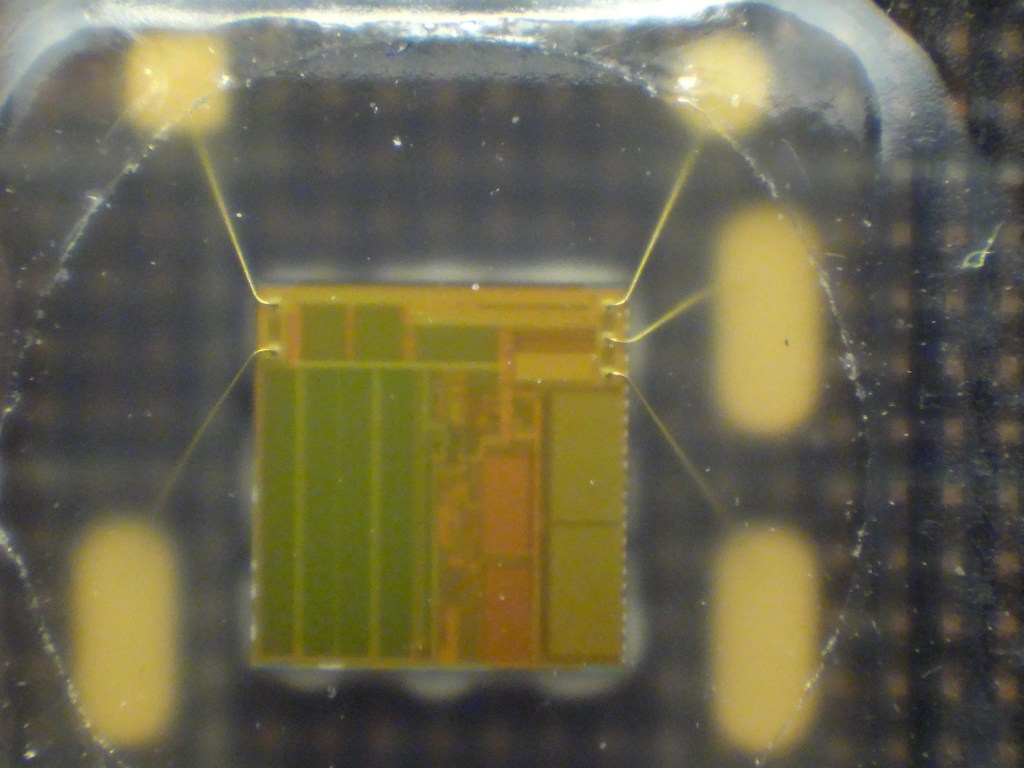
The eUICC Is the Programmable SIM Platform Inside the Device
The hardware foundation is the eUICC.
An eUICC is the secure platform that can store and manage operator Profiles.
The Profile contains the subscription-related data and applications required for the device to use a mobile network according to the eSIM architecture.
Unlike a workflow built around physically replacing one SIM card with another, the eUICC can receive Profiles remotely.
That is the foundation of Remote SIM Provisioning.
The physical form can vary. An eUICC can be embedded into a device. It can also appear in other package forms depending on the implementation.
For IoT, the important property is programmability.
The device can remain installed while the connectivity Profile changes through the remote-provisioning system.
That turns the SIM function from a manually replaced object into a remotely managed secure component.
Consumer eSIM Assumes a User Is Part of the Provisioning Loop
The consumer eSIM architecture was designed around devices such as phones, tablets and wearables.
Those products usually have a user interface.
The user can scan a QR code. Approve a Profile download. Choose a mobile plan. Confirm activation.
The Local Profile Assistant, or LPA, handles important device-side parts of that process.
IoT changes the operating assumptions.
A sensor on a pole may not have a camera for scanning a code. A modem inside industrial equipment may not expose a consumer-style settings screen. A fleet operator may need to manage thousands of devices from one system.
SGP.32 keeps much of the existing consumer eSIM foundation but separates the relevant profile-assistant responsibilities into new IoT components.
That is where the IPA and eIM enter the architecture.
The Consumer LPA Is Split Into the IPA and eIM
GSMA explains the IoT design as a split of functions that exist around the consumer Local Profile Assistant.
The IoT Profile Assistant, or IPA, remains close to the device and eUICC.
The eSIM IoT Remote Manager, or eIM, moves remote management intent outside the device.
This separation is the core architectural idea.
The IPA handles device-side functions needed to provision the eUICC.
The eIM can trigger Profile downloads and send Profile State Management Operations remotely.
That means the device does not need to collect the same direct user intent expected in a consumer-phone flow.
A remote system can provide the management direction.
The architecture is therefore eIM-centric rather than user-interface-centric.
The IPA Can Live in the Device or Inside the eUICC
The IoT Profile Assistant has two placement options.
It can run in the IoT device. GSMA calls that IPAd.
It can also run inside the eUICC. GSMA calls that IPAe.
Both options perform the IPA role, but the software boundary is different.
An IPAd is part of the device-side software environment.
An IPAe places the Profile Assistant functionality inside the eUICC platform itself.
The architecture and test specifications recognize both forms.
This matters for device makers because not every IoT product has the same software stack.
A more capable device may integrate the IPA into its operating software.
Another implementation may place more of the profile-assistant functionality in the eUICC.
The standard defines the role without requiring every device to use the same internal placement.
The IPA Connects the eUICC to Profile-Download Infrastructure
The IPA provides the functions that let the eUICC be provisioned by the SM-DP+.
SM-DP+ stands for Subscription Manager Data Preparation Plus.
It is the eSIM infrastructure component used to prepare and deliver Profiles in the consumer and IoT architectures.
The IPA acts as the device-side participant in that download process.
GSMA’s architecture also gives the IPA functions around discovery, notifications and conveying remote-management operations and their results.
This is an important separation of responsibilities.
The SM-DP+ handles Profile-delivery infrastructure.
The eUICC securely stores and manages Profiles.
The IPA provides the device-side bridge.
The eIM provides remote management direction.
Each component handles a different part of the lifecycle.
The eIM Moves Profile Management Into a Remote Control Layer
The eSIM IoT Remote Manager is responsible for remote Profile State Management Operations.
That includes management of a single IoT device or a fleet.
GSMA describes the eIM as able to trigger Profile downloads and remotely enable, disable or delete Profiles through the IoT architecture.
The eIM can also participate in eIM Configuration Operations when supported and associated with the eUICC.
The component can exist as a standalone system.
It can also be part of a larger device-management platform.
That second option is important for IoT.
A manufacturer may already operate a platform that tracks devices, firmware, configuration and connectivity.
The eIM role can fit into that broader management environment.
Connectivity-profile control becomes another remote device-management function.
A Fleet Does Not Need a Person Standing Beside Every Device
The value of the architecture becomes clearer at fleet scale.
Imagine thousands of connected meters, trackers, gateways or industrial devices deployed across many locations.
The physical device may remain in place for years.
A profile-management event can still happen remotely.
The management system can trigger a Profile download.
A Profile can be enabled.
Another can be disabled.
A Profile can be deleted when the lifecycle requires it.
The specification defines the technical paths that let those operations reach the eUICC through the IPA and eIM architecture.
This does not mean every fleet automatically changes networks dynamically.
The operator and device-management policies still decide when actions happen.
The standard provides the remote mechanism.
That is the infrastructure shift: Profile lifecycle becomes something fleet software can manage without requiring physical SIM replacement at every endpoint.
Network-Constrained Devices Are Part of the Design Target
SGP.31 and SGP.32 explicitly target network-constrained IoT devices.
That phrase matters.
An IoT endpoint may not have the same always-on broadband connection as a smartphone.
Connectivity may be narrow. Intermittent. Power-aware. Available only at certain times.
The SGP.32 technical specification defines connectivity parameters for the IPA and recognizes communication channels such as HTTPS and CoAP in its technical model.
The standard therefore does not assume every device behaves like a full consumer computer.
The remote-provisioning architecture has to operate through the communication environment available to the IoT product.
That is one reason profile management is separated into components.
The remote manager can coordinate lifecycle intent while the device-side IPA works within the device’s actual connectivity model.
UI-Constrained Devices No Longer Need a Consumer Activation Flow
User-interface constraint is the other explicit design target.
A phone can display plan names, confirmation dialogs and activation codes.
Many IoT devices cannot.
Some have no screen at all. Others expose only a service interface intended for installers or remote administration.
SGP.32 moves the user-intent role away from the device-side assistant.
GSMA explains that the IPA does not need to capture user intent in the same way as the consumer LPA because that responsibility has moved to the eIM side of the architecture.
That makes the system aligned with headless equipment.
The device can still have secure profile-management logic.
It simply does not need a human-facing activation experience built into the product.
Profile State Management Becomes a Defined Remote Operation
Downloading a Profile is only one step.
The Profile also has a state.
It can be enabled for use. Disabled. Deleted.
The IoT architecture groups remote lifecycle actions under Profile State Management Operations, or PSMO.
The eIM can initiate those operations.
The IPA conveys the relevant operations and results through the architecture.
The eUICC performs the secure Profile-management functions defined for it.
This gives the fleet platform a lifecycle model.
Provisioning is not a one-time onboarding event.
A device can move through several connectivity states during its service life.
The standard defines mechanisms for managing those states remotely.
The Architecture Reuses Existing SM-DP+ Infrastructure
SGP.32 does not create an entirely separate mobile-provisioning universe.
The IoT architecture is based substantially on the consumer eSIM architecture.
SM-DP+ remains part of the system.
SM-DS, the Subscription Manager Discovery Service, also appears in the IoT functional architecture.
The new IoT-specific components sit around those existing remote-provisioning services.
That reuse matters because operators and eSIM providers already understand the broader RSP model.
The IoT architecture adapts it for constrained endpoints rather than replacing every server role.
The result is a bridge between established eSIM infrastructure and a different device-management model.
This also helps explain why SGP.32 is an architecture change rather than a completely separate subscription system.
The mobile operator still provides the Profile.
The SM-DP+ still participates in preparing and delivering that Profile.
The eUICC still stores the Profile securely.
What changes is how a constrained IoT device receives remote management intent.
The eIM and IPA add the control path that lets the existing provisioning infrastructure work with devices that may not have a person, screen or consumer activation flow available at deployment time.
Security Functions Are Part of the SGP.32 Technical Specification
Remote Profile management has to be authenticated and protected.
SGP.32 therefore includes security functions as part of its formal scope.
The architecture uses certificates and secure interfaces between the relevant components.
GSMA operates eSIM compliance and certificate processes for products that implement the specifications.
The eIM also has certificate-related requirements in the IoT ecosystem.
The important point is structural.
Remote management is not an informal API layered on top of a SIM chip.
The security relationships are part of the standard itself.
A Profile package, eUICC operation and management message move through defined roles and interfaces.
The security model is designed into the provisioning architecture.
Interoperability Is Tested Component by Component
GSMA also maintains test specifications for the IoT architecture.
SGP.33-1 covers the eUICC.
SGP.33-2 covers the IPA.
SGP.33-3 covers the eIM.
The current public test versions listed by GSMA are based on the SGP.31/32 version-1 architecture.
This division mirrors the system design.
The eUICC can be tested for its expected behavior.
The IPA can be tested as its own implementation.
The eIM can be tested independently.
Then the components can participate in end-to-end interoperability work.
That is how a multi-vendor architecture becomes deployable.
The specification defines the interfaces.
The test plans define how implementations demonstrate expected behavior against those interfaces.
The separation also gives vendors a clearer integration boundary.
An eUICC supplier can validate the secure element implementation.
A device maker can validate an IPAd.
An eIM provider can validate remote-management behavior.
An operator or service provider can then combine compliant components through the standardized interfaces.
That does not remove product-specific integration work, but it gives each part of the IoT provisioning chain a defined role and a corresponding test scope.
SGP.32 Is Moving From Specification Into Commercial IoT Tooling
The architecture is also appearing in commercial implementation and testing environments.
GSMA member resources published in 2026 describe certified eSIMs, eIM products, device tools and network providers working with the SGP.32 model.
Comprion and Thales, for example, announced an end-to-end test environment for SGP.32 implementations in March 2026.
Their work includes eUICC hardware with an integrated IPAe and tools for validating interaction across the profile-management architecture.
Those examples are vendor implementations, not requirements imposed by the standard.
They show that the architecture has moved beyond specification drafting.
Device makers and connectivity providers now have implementation components and test environments built around the same roles defined by SGP.32.
eSIM Is Becoming a Device-Management Layer for IoT Connectivity
SGP.32 changes the way eSIM should be understood in IoT.
The eUICC is the secure programmable SIM platform.
The SM-DP+ prepares and delivers Profiles.
The IPA sits close to the device and can live either in device software or in the eUICC.
The eIM provides the remote management layer.
Profile downloads can be triggered remotely.
Profiles can be enabled, disabled and deleted through defined lifecycle operations.
The design explicitly targets devices with constrained networks, constrained user interfaces or both.
Test specifications cover the eUICC, IPA and eIM as separate implementation roles.
That creates a remote-provisioning architecture suited to fleets rather than only individual consumer devices.
The eSIM is still about mobile-network identity and subscription Profiles.
But for IoT, it is also becoming infrastructure.
Connectivity can be managed as part of the device lifecycle.
That is the upgrade.