NVIDIA has agreed to acquire Hugging Face for $12.93 billion, one of the chipmaker’s largest deals and a major move beyond GPUs. Hugging Face is a critical distribution layer for open models, datasets, applications and developer tooling. NVIDIA says the platform will remain open, multi-cloud and multi-accelerator, and that NVIDIA hardware will not be required. The strategic question is whether NVIDIA is buying more than a company: it may be buying a direct route to the developers who decide which models, frameworks and infrastructure become standard.
NVIDIA Is Buying More Than an AI Website
NVIDIA has agreed to acquire Hugging Face for $12.93 billion.
The obvious reading is that the world’s dominant AI-chip company is buying the best-known platform for open AI models.
That is true.
It is also incomplete.
Hugging Face has become one of the places where developers discover models, compare them, download them, fine-tune them, test demos, publish datasets and decide which parts of the AI stack they want to use.
NVIDIA already owns a critical layer below that activity: compute.
Now it is moving toward a layer above it: distribution.
That is what makes this deal strategically important.
The company is not only trying to sell more GPUs.
It is moving closer to the point where developers decide what to run in the first place.
The Deal Is an Agreement — Not a Completed Acquisition Yet
The wording matters.
On September 3, 2026, NVIDIA announced that it had agreed to acquire Hugging Face for exactly $12,930,300,000.
That means the transaction has been announced and agreed.
It does not mean we should casually write as if Hugging Face has already been fully absorbed into NVIDIA’s operations.
Reuters reports that roughly $11.9 billion of the deal is for Hugging Face investors, with an equity-based retention program of up to $1 billion for employees who join NVIDIA.
For TUF, the safest language is simple:
NVIDIA has agreed to acquire Hugging Face.
Until the transaction is fully completed, that distinction should remain.
Why Hugging Face Is Worth So Much to NVIDIA
Hugging Face is not just a model-hosting site anymore.
According to NVIDIA’s announcement, the platform is used by more than 18 million developers, researchers and creators.
It hosts more than 3 million models.
More than 500,000 datasets.
Around 1 million applications.
More than 200,000 companies use the platform to discover, evaluate, customize and deploy AI.
Those numbers explain the logic of the acquisition more clearly than the price tag.
Hugging Face sits where models become usable.
That makes it a distribution layer, a discovery layer and increasingly an application layer for open AI.
The AI Stack Is Becoming More Vertical
Modern AI is often described as a stack.
At the bottom are chips and systems.
Above them are networking, training and inference.
Then come model repositories, developer tooling and applications.
NVIDIA has already expanded far beyond the chip itself.
CUDA tied software development closely to NVIDIA GPUs.
DGX turned the company into a systems vendor.
Networking expanded its role inside AI infrastructure.
Inference software and cloud services moved it further up the stack.
Hugging Face would extend that vertical reach again.
The important point is not that NVIDIA suddenly owns every AI layer.
It does not.
The point is that it is becoming present in more of them.
Hugging Face Is Where Model Choice Happens
Developers do not always begin an AI project by choosing a chip.
They often begin by choosing a model.
Which one is small enough?
Which one has the right license?
Which one works in my language?
Which one has the right benchmark profile?
Which one has a good ecosystem?
Hugging Face is one of the first places many developers go to answer those questions.
That gives the platform influence over downstream infrastructure.
Once a model is selected, the developer begins asking how to fine-tune it, serve it and scale it.
That is where NVIDIA’s infrastructure becomes relevant.
Distribution Can Be More Valuable Than Direct Control
NVIDIA does not need every model on Hugging Face to be its own.
It does not need every workload to run on NVIDIA hardware.
It can still benefit if the platform becomes the default place where AI builders begin.
Distribution creates optionality.
If developers use Hugging Face to discover open models, NVIDIA can surface optimized inference paths.
It can integrate libraries.
It can improve deployment tooling.
It can make NVIDIA-accelerated workflows easier.
The strategic value comes from proximity to developers, not only ownership of content.
NVIDIA Is Promising the Platform Will Stay Open
Jensen Huang addressed the biggest concern directly in NVIDIA’s announcement.
He said Hugging Face will remain an open platform for the entire AI ecosystem.
Developers will still be able to choose the models they want.
The frameworks they want.
The clouds and inference providers they want.
The compute platforms they want.
NVIDIA also says NVIDIA compute will not be required to build on or deploy through Hugging Face.
That commitment is central to the deal.
Hugging Face’s value depends heavily on being useful across the industry rather than being perceived as one vendor’s storefront.
The Neutrality Question Will Not Disappear Because of a Promise
The harder question is not whether NVIDIA allows rival hardware.
The harder question is whether developers continue to see the platform as neutral.
A platform can technically support AMD, Intel, Google TPUs or other accelerators while still giving one ecosystem better optimization, documentation, placement or integration.
Reuters reports that some developers and analysts are already concerned about whether rival hardware could gradually receive less attention.
NVIDIA says the opposite.
The platform will remain multi-accelerator and multi-cloud.
The gap between those positions will be measured by what happens after the transaction, not by launch-day statements.
Open Models Are Strategically Useful to NVIDIA
Open models create a different market structure from closed AI APIs.
A company can download an open-weight model.
Run it locally.
Fine-tune it.
Deploy it on its own infrastructure.
Change the serving stack.
Move between vendors.
That flexibility creates more infrastructure decisions.
And infrastructure decisions create more opportunities for NVIDIA.
Closed API products hide more of the compute layer from the user.
Open models expose it.
That makes open AI strategically compatible with NVIDIA’s business.
NVIDIA Was Already Deep Inside Hugging Face
The acquisition does not come from nowhere.
NVIDIA says it is already the largest contributor of open models and data on Hugging Face.
The company says it has published more than 500 models and more than 250 open datasets on the platform.
Its Nemotron work is part of that strategy.
NVIDIA has increasingly positioned open-weight AI as a way for enterprises and institutions to retain more control over deployment.
Buying Hugging Face takes that strategy from participation to ownership of the platform itself.
CUDA Built a Developer Moat Below the Model Layer
NVIDIA’s greatest software advantage historically was not a model repository.
It was CUDA.
CUDA made NVIDIA GPUs programmable for general-purpose parallel computing and helped build a large software ecosystem around the company’s hardware.
That created switching costs.
Hugging Face could create a different kind of developer relationship.
CUDA sits close to hardware.
Hugging Face sits close to model selection and application development.
If NVIDIA can connect those layers without damaging platform neutrality, the company gains influence at both ends of the developer workflow.
The Deal Could Make Deployment Much Easier
Hugging Face already connects model discovery to deployment.
NVIDIA already provides optimized inference stacks.
The natural integration path is obvious.
A developer finds a model.
Checks the license.
Tests it.
Selects an optimized runtime.
Deploys it.
Monitors it.
Scales it.
That flow could become much smoother under common ownership.
The upside for developers is reduced friction.
The risk is that the easiest path gradually becomes the NVIDIA path even when other options technically remain available.
Convenience can shape ecosystems more strongly than explicit exclusivity.
Inference Is Becoming the Bigger Battlefield
Training frontier models attracts attention because the clusters are enormous.
But deployed AI systems run inference continuously.
Every generated token.
Every image.
Every embedding.
Every agent action.
Every local model call.
As the number of AI applications grows, inference becomes a huge infrastructure market.
Hugging Face gives NVIDIA a closer connection to that layer.
The platform is where millions of builders already move from model discovery toward deployment.
That could make the acquisition strategically useful even if it never produces direct revenue at the scale of NVIDIA’s GPU business.
The Acquisition Also Diversifies NVIDIA’s Customer Access
One risk for NVIDIA is concentration.
The largest AI companies buy enormous amounts of compute.
Some of those same companies are developing custom accelerators to reduce dependence on NVIDIA.
Reuters highlights this directly, citing companies including Meta, OpenAI and Microsoft.
Hugging Face gives NVIDIA a more direct route to a much wider developer base.
Instead of relying only on a relatively small number of hyperscale buyers, NVIDIA can strengthen its relationship with startups, enterprises, researchers and independent developers.
Hugging Face Is Also a Dataset and Application Platform
It would be a mistake to reduce Hugging Face to model downloads.
The platform hosts hundreds of thousands of datasets.
Spaces lets developers publish interactive AI applications and demos.
Its software ecosystem helped standardize how many developers work with modern models.
Hugging Face also expanded into robotics through LeRobot and the acquisition of Pollen Robotics.
That means NVIDIA is buying access to multiple AI workflows at once.
Models.
Data.
Apps.
Libraries.
Evaluation.
Deployment.
Robotics.
The strategic surface is much wider than a simple repository.
The Robotics Angle Is Easy to Miss
Hugging Face has been moving into open robotics.
Its LeRobot ecosystem grew rapidly.
It acquired Pollen Robotics.
It began offering Reachy 2.
That overlaps naturally with NVIDIA’s own robotics strategy around Jetson, Isaac and GR00T.
The acquisition therefore connects not only software AI but potentially physical AI as well.
Open robot models and datasets hosted on Hugging Face can ultimately feed demand for training, simulation and edge inference.
Again, the logic returns to the same pattern.
Distribution creates infrastructure demand.
The Price Reflects Strategic Value, Not Just Current Revenue
Reuters notes that Hugging Face was valued at $4.5 billion in its last disclosed funding round in 2023.
The new agreement is worth $12.93 billion.
That is a large jump.
The explanation is unlikely to be current revenue alone.
NVIDIA is paying for strategic position.
Developer reach.
Open-model distribution.
Community.
Tooling.
Data.
The ability to sit closer to where AI projects begin.
This does not prove the price is cheap or expensive.
That would be an investment judgment.
The useful point is that the acquisition price makes more sense when viewed as control of a strategic layer rather than a conventional SaaS purchase.
The Biggest Risk Is Damaging What Makes Hugging Face Valuable
The acquisition contains an obvious paradox.
NVIDIA gains value from owning Hugging Face because Hugging Face is broadly trusted and broadly used.
If ownership causes developers to leave, the value falls.
If rival hardware vendors stop investing in integrations, the ecosystem narrows.
If model builders decide another repository feels more neutral, distribution fragments.
NVIDIA therefore has a strong economic reason to preserve openness.
That does not remove conflicts of interest.
It makes managing them part of the product strategy.
Open Source Can Be Forked — Platforms Are Harder
Open-source code can often be forked.
A platform ecosystem is harder.
You can copy a repository.
You cannot instantly copy millions of users.
Download counts.
Discussion histories.
Model cards.
Community trust.
Datasets.
Spaces.
Brand recognition.
Network effects.
That is why platform ownership matters even in an open ecosystem.
The underlying models may remain downloadable.
But discovery, reputation and distribution still concentrate value.
NVIDIA is buying those network effects.
Hugging Face Could Become the Front Door to NVIDIA Infrastructure
The strongest strategic interpretation is straightforward.
A developer opens Hugging Face.
Finds a model.
Tests it.
Fine-tunes it.
Deploys it.
Behind the scenes, NVIDIA provides the easiest optimized path for each step.
That does not require lock-in.
It only requires default convenience.
If NVIDIA can make its infrastructure the path of least resistance while preserving credible alternatives, it can gain usage without forcing exclusivity.
That is a more subtle strategy than simply blocking competitors.
But NVIDIA Does Not Automatically Own Open AI
The title deliberately says NVIDIA wants the open AI layer.
It does not say NVIDIA now owns open AI.
Open models come from many organizations.
Meta.
Mistral.
DeepSeek.
Qwen.
Google.
Independent labs.
Universities.
Startups.
Developers can host models elsewhere.
Cloud providers have their own catalogs.
Open-source libraries can move.
The acquisition increases NVIDIA’s influence.
It does not convert an open ecosystem into one company’s property.
The Deal Could Pressure Rival Infrastructure Vendors
AMD, Intel, Google and cloud providers will be watching integration decisions closely.
If Hugging Face remains equally strong across accelerators, the ecosystem may continue normally.
If NVIDIA-specific optimizations move faster, competitors may need to invest more heavily in their own developer tooling and distribution channels.
That could accelerate competition around inference software rather than only raw silicon.
The next AI platform war may be fought as much through model hubs, developer tools and deployment pipelines as through chip benchmark charts.
Open AI Is Becoming an Infrastructure Market
Open models began partly as a research and community movement.
They are increasingly becoming enterprise infrastructure.
Companies want models they can customize.
Governments want control over deployment.
Organizations want to run AI in private environments.
Developers want smaller models that can run locally.
That creates demand for optimized compute at every scale.
NVIDIA’s Hugging Face acquisition is a bet that open AI will not shrink the infrastructure market.
It may expand it.
What NVIDIA Has Actually Confirmed
NVIDIA has confirmed that it agreed to acquire Hugging Face for $12,930,300,000.
The company says Hugging Face has more than 18 million users across developers, researchers and creators.
It says the platform hosts more than 3 million models, 500,000 datasets and 1 million applications and is used by more than 200,000 companies.
NVIDIA says Hugging Face will remain open.
It says developers will retain freedom to choose models, frameworks, clouds, inference providers and compute platforms.
It says NVIDIA hardware will not be required.
NVIDIA also says Hugging Face will continue supporting open-source and open-weight models across the ecosystem and remain multi-cloud and multi-accelerator.
What We Should Not Claim Yet
We should not say the acquisition is already fully completed unless NVIDIA later confirms closing.
We should not say NVIDIA hardware is required on Hugging Face.
NVIDIA explicitly says the opposite.
We should not say Hugging Face will stop supporting rival chips.
There is no current evidence for that.
We should not say NVIDIA now owns open-source AI.
It does not.
We should not claim the transaction guarantees more GPU sales.
That is strategic analysis, not an announced outcome.
And we should not assume the platform’s neutrality will remain unchanged forever.
That is something the ecosystem will have to observe.
The Bigger Story Is Where NVIDIA Wants to Sit in the AI Workflow
For years, NVIDIA’s most important position was obvious.
The GPU.
Then the company expanded into systems, networking, software, cloud services, inference and robotics.
Hugging Face pushes it closer to the developer’s first decision.
Which model should I use?
That is strategically powerful.
If NVIDIA can remain underneath the workload as compute and also stand near the top as the platform where developers discover and deploy models, it gains influence across a much larger portion of the AI stack.
The acquisition is not just about Hugging Face.
It is about NVIDIA deciding that the future of AI infrastructure begins before the first GPU is selected.
Jalapeño Moves OpenAI From Models and Serving Software Into Silicon
OpenAI has spent years working above the chip.
Models.
Inference kernels.
Serving software.
APIs.
Products such as ChatGPT and Codex.
Jalapeño adds another layer underneath them.
OpenAI and Broadcom unveiled Jalapeño in June 2026 as OpenAI’s first custom inference processor. On August 25, OpenAI published its first measured performance results from engineering hardware running public language models.
The chip is not presented as a general consumer processor.
It was designed around large-language-model inference.
That distinction defines the project.
Training builds or updates model weights.
Inference uses those trained weights to answer requests.
Every ChatGPT response, API completion or agent step becomes an inference workload somewhere in the serving infrastructure.
OpenAI is now designing hardware specifically around that workload.
The company describes Jalapeño as the first generation of a multigenerational compute platform built with Broadcom and other infrastructure partners.
The shift is architectural.
OpenAI is no longer optimizing only the model that runs on the machine.
It is also designing part of the machine around the model-serving process.
Inference Has Several Phases With Different Bottlenecks
One reason to design custom inference hardware is that serving a language model is not one uniform operation.
OpenAI separates the workload into phases.
Prefill processes the user’s prompt and existing context.
Decode generates the response token by token.
Those phases stress the system differently.
OpenAI describes prefill as more compute-intensive.
Decode depends more heavily on memory bandwidth because the system repeatedly accesses model state while producing each next token.
Communication becomes another part of the workload when tensors, model state or cached information need to move between cores or accelerators.
The hardware can therefore spend time computing, moving data or waiting for another part of the system.
Jalapeño was designed around those transitions.
Instead of optimizing one isolated arithmetic peak, OpenAI says it designed compute, memory, networking and software together around the full inference request.
The goal is to keep the useful work moving through the system.
That makes inference performance a systems problem.
The chip matters.
The memory matters.
The network matters.
The serving software deciding where every piece of work goes matters too.
KV Cache Placement Becomes a Hardware Design Problem
The KV cache is one of the clearest examples of software behavior turning into hardware architecture.
During autoregressive generation, a transformer reuses information from earlier tokens instead of recomputing everything from the beginning for every new token.
That reusable state is stored in the key-value cache.
Long conversations and agent sessions can make that state substantial.
Where the cache lives affects how far the data must travel and how quickly it can be reused.
OpenAI says Jalapeño allows model state, including the KV cache, to be explicitly placed and kept local while the system activates the required combination of compute, memory and networking.
That is a hardware-software decision.
The serving layer knows what model state exists.
The hardware exposes a structure that lets the system place that state deliberately.
The network connects the pieces that need to communicate.
The architecture is therefore shaped around a pattern created by language models themselves.
The cache is no longer just an implementation detail inside inference software.
It becomes part of how the accelerator system is organized.
The Network Is Part of the Accelerator Architecture
A custom inference chip does not operate alone.
Large models can span many accelerators.
Requests can move through several devices.
Expert models may need to route work to different parts of the system.
Cached state can be distributed.
Jalapeño treats networking as part of the architecture rather than an external connection added afterward.
OpenAI says the chip was designed to minimize data movement and communication delays and that its network is integral to the system.
Broadcom contributes networking technology, including Tomahawk networking silicon, to the wider platform.
That matters because inference speed depends on more than tensor arithmetic.
A processing unit can only continue when the data it needs is available.
If the system can keep model state closer to the compute that will use it and move information efficiently when communication is necessary, more of the request can stay active.
OpenAI calls the resulting connected area a large domain in which the workload can remain inside one coordinated system.
The chip and network therefore form one serving architecture.
The accelerator does the computation.
The network helps make that computation available across the larger model.
OpenAI Designed Jalapeño Around Both Prefill and Decode
Some inference systems can be organized around separate resources for different phases.
Jalapeño takes another route.
OpenAI describes the accelerator as balanced and fungible across prefill and decode.
The same architecture is intended to handle both phases while adapting to the changing mix of compute, memory and communication requirements.
That becomes relevant for interactive agents.
An agent can receive context.
Generate a short output.
Call a tool.
Receive new information.
Generate again.
Repeat the sequence many times.
The workload moves through prefill and decode repeatedly rather than following one long static pattern.
OpenAI says this changing balance was part of the design target.
The hardware therefore reflects the behavior of the software being served.
A conventional chat completion is one inference pattern.
A long, multi-step agent session creates another.
The processor is designed around the idea that the mix can change during real use.
That is an example of custom silicon being shaped by product workload instead of being designed independently from it.
OpenAI Tested the Chip on Three Public Model Families
The August results were not limited to one OpenAI model.
OpenAI tested Jalapeño with GPT-OSS 120B, DeepSeek R1 670B and Kimi K2.5 1T.
That matters because a chip designed by a model company could otherwise be interpreted as hardware for one internal model family.
OpenAI says Jalapeño was designed to support current and future language models across the industry.
The three public tests give the company a way to measure that claim on architectures developed outside OpenAI as well as its own open-weight model.
The models also differ in scale and serving behavior.
That gives the benchmark more than one workload.
OpenAI reports that the chip remained on the throughput-per-power and latency frontier across the tested operating range for all three.
Those are OpenAI’s reported results from the InferenceX benchmark environment.
The larger architectural point does not depend on one comparison.
Jalapeño is being programmed as a general language-model inference target.
The hardware is custom.
The model support is intended to remain broader than one model.
The Public Results Measure Throughput and Latency Together
Inference performance can be described in several ways.
Tokens per second.
Tokens per user.
Time between generated tokens.
End-to-end request latency.
Throughput per watt.
Maximum total serving capacity.
A system can look different depending on which measurement is chosen.
OpenAI says it evaluated Jalapeño at matched user experience using InferenceX, a public benchmark from SemiAnalysis.
The company measured how much AI work the system could complete per unit of power while meeting latency requirements.
Across GPT-OSS 120B, DeepSeek R1 and Kimi K2.5, OpenAI reports 1.5 to 1.9 times more AI work per watt at peak throughput and 1.7 to 3.6 times lower end-to-end latency than the comparison systems used in those tests.
For highly interactive operating points, OpenAI reports 2.1 to 4.1 times higher performance.
Those figures belong to the specific benchmark configurations OpenAI published.
They are useful because they show what the company is optimizing.
Not only peak arithmetic.
Not only one-user latency.
The design target is the combination of serving volume, response time and power.
Power Efficiency Is Becoming a Serving Metric
Jalapeño also makes power part of the performance discussion.
OpenAI rates the processor package at 700 watts.
The company says measured sustained power remained at or below 550 watts on the workloads used in its August tests.
OpenAI then normalizes benchmark results using published chip power ratings for the compared accelerators.
That produces throughput-per-kilowatt figures.
The reason is practical.
AI infrastructure is limited by more than the number of chips a company can buy.
A data center has electrical capacity.
Cooling capacity.
Rack limits.
Network capacity.
The same amount of available power can support different amounts of useful inference depending on the complete system.
A custom accelerator can therefore be evaluated by how much model-serving work fits inside a power envelope.
This is especially relevant when the operator is also the company serving the model.
The hardware decision eventually reaches the product as response capacity.
More useful work per kilowatt means the same electrical infrastructure can process more inference requests.
That is the connection between chip architecture and service scale.
The Chip Was Co-Designed With Broadcom and Celestica
Custom silicon does not mean one company manufactures every layer itself.
OpenAI designed Jalapeño’s architecture around its model and serving requirements.
Broadcom provides silicon implementation and networking expertise.
Celestica contributes board, rack and system integration work.
OpenAI describes the collaboration as a multi-generation platform rather than one isolated processor.
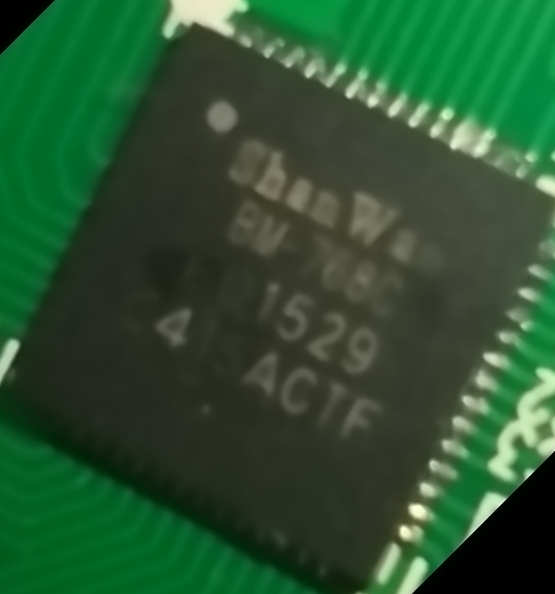
That division of work is important.
A complete accelerator program requires more than a block diagram.
The design has to become physical silicon.
The chip needs packaging.
Boards.
Power delivery.
Memory.
Networking.
Rack integration.
Production systems.
Software.
Deployment tooling.
The Jalapeño project connects OpenAI’s model and serving knowledge to companies that specialize in turning those requirements into production infrastructure.
This is how a model developer can move into custom hardware without becoming every supplier in the semiconductor chain.
The architecture starts closer to the workload.
Partners industrialize the system around it.
AI Models Were Used During the Chip Development Cycle
AI was also used to build the processor that will run AI.
OpenAI says earlier generations of its models assisted engineers during Jalapeño design and bring-up.
The company reports moving from initial design to manufacturing tapeout in nine months for the chip-development phase it describes.
AI was used to explore implementations, shorten design and verification loops and optimize arithmetic circuits.
That creates a feedback loop.
Models run on hardware.
Model behavior tells engineers where the serving system spends time.
AI tools help engineers design and verify a new accelerator.
The new accelerator is then used to serve later models.
This does not remove semiconductor engineering from the process.
It changes some of the tools inside it.
The same class of software being optimized for deployment becomes part of the engineering workflow used to build the deployment hardware.
Jalapeño therefore represents two forms of hardware-software co-design.
The chip is designed around AI workloads.
AI is also used during parts of the chip-design process.
The Programming Model Was Designed for Humans and AI
OpenAI also designed the software interface with AI-assisted programming in mind.
The company describes Jalapeño as a predictable programming target based on local tensors, explicit communication and predictable synchronization.
Those properties make the hardware mapping problem more structured.
An engineer can describe the work.
An AI system can help decide where that work should be placed, scheduled and coordinated across the accelerator system.
This matters because new model families still require new kernels and model-specific optimization.
The hardware does not automatically run every architecture at maximum efficiency.
The software stack has to adapt.
OpenAI reports using Codex with GPT-Astra to bring GPT-OSS 120B, DeepSeek R1 and Kimi K2.5 to high performance on Jalapeño within two months even though those models were not part of the original production plan.
For selected GPT-OSS attention and mixture-of-experts blocks, OpenAI says AI-generated implementations ran 1.5 to 1.8 times faster than the existing expert-written implementations.
OpenAI explicitly limits those numbers to selected blocks rather than the complete model.
The important architectural point is the programming loop.
Custom hardware and AI-assisted kernel development are being designed together.
Serving Software Becomes Part of the Silicon Advantage
A custom accelerator only becomes useful when the serving stack can keep it busy.
Model weights have to be loaded.
Requests have to be scheduled.
KV cache has to be placed.
Communication has to be coordinated.
Kernels have to match the model architecture.
Batching and interactive traffic have to share the system.
That software layer is one reason OpenAI describes Jalapeño as a full-stack project.
The company operates ChatGPT, Codex and the API.
Those products generate real serving patterns.
OpenAI can observe how the workloads behave and use those observations when designing the chip and its runtime.
Then the software can be adjusted around capabilities added to the hardware.
The information moves both directions.
Product workload informs infrastructure.
Infrastructure changes what the product can serve.
That feedback loop is different from purchasing a processor whose architecture was designed independently from one company’s specific deployment patterns.
Jalapeño makes the inference operator part of the silicon-design process.
Custom Silicon Adds Another Compute Source to OpenAI's Infrastructure
Jalapeño adds another compute source to OpenAI’s infrastructure strategy.
OpenAI says it will continue widely deploying accelerators from NVIDIA and other partners for both training and inference.
The custom processor therefore sits beside external hardware in the wider compute fleet.
That is consistent with the scale of modern AI infrastructure.
Training and inference use different workload mixes.
Individual model families can benefit from different accelerator characteristics.
Capacity has to grow across several suppliers and data-center environments.
Jalapeño gives OpenAI a first-party architecture it can shape around its own serving requirements while partner accelerators continue supplying substantial compute capacity.
This makes the custom-chip strategy easier to understand.
It is another layer of infrastructure optimization.
Some workloads can run on OpenAI-designed silicon.
Others can continue running on external accelerator platforms.
The serving system can grow with both.
The First Generation Is Planned for Deployment by the End of 2026
The August results come from engineering hardware and pre-deployment qualification.
OpenAI says it plans to begin deploying Jalapeño within its compute infrastructure by the end of 2026.
Before that scale-up, the company says it is continuing production qualification, software maturation and validation across additional models.
That status matters.
The published benchmark results show working first-party silicon.
They do not mean the chip is already carrying the full production load of OpenAI’s services.
The project is moving from development into deployment.
Broadcom and OpenAI have described the platform as intended for large-scale data-center rollout across multiple generations.
The infrastructure transition will therefore happen over time.
First silicon.
Benchmarks.
Production qualification.
Software maturity.
Rack integration.
Deployment.
Then later generations.
That sequence is how a custom accelerator becomes part of an operating AI service rather than remaining a laboratory prototype.
Gen 2 and Gen 3 Turn Jalapeño Into a Roadmap
OpenAI already describes Jalapeño as the first generation of a longer processor roadmap.
In the August update, the company said Gen 2 was deep in development and Gen 3 was taking shape.
That changes the meaning of the first chip.
A one-off ASIC can optimize one moment in model architecture.
A multigenerational platform can learn from each deployment cycle.
The first generation reveals how real workloads behave on first-party silicon.
The software team learns which kernels need improvement.
The hardware team sees where data movement occurs.
The serving team sees which workloads map well to the architecture.
Those observations can feed the next design.
At the same time, model architecture continues changing.
Context lengths grow.
Agent workflows become more iterative.
Mixture-of-experts routing changes communication patterns.
New numerical formats alter memory and arithmetic requirements.
A recurring silicon roadmap gives OpenAI a way to incorporate those changes into later hardware.
The processor becomes part of the model roadmap instead of a separate infrastructure purchase.
Jalapeño Shows Why AI Inference Is Moving Toward Full-Stack Design
Jalapeño is useful as a case study because it connects parts of AI infrastructure that are often discussed separately.
The model defines the computation.
Inference software organizes the request.
The KV cache creates persistent state.
Memory bandwidth moves that state.
The network connects accelerators.
The scheduler decides where work goes.
Power limits determine how much of the system fits inside a data center.
The chip architecture has to support all of those layers.
OpenAI designed Jalapeño around that complete serving path.
Broadcom and Celestica help turn the architecture into deployable systems.
OpenAI models help program and optimize the hardware.
The same hardware is tested on several public model families.
The first measured results are now available, while production deployment is planned to begin later in 2026.
That makes custom silicon more than a chip story.
It is an inference-stack story.
As AI products depend on larger volumes of interactive model serving, the companies operating those products have more reason to optimize below the software layer.
Jalapeño is OpenAI’s first step into that layer.
That is the upgrade.