XPENG has commissioned a dedicated production line for its IRON humanoid robot, and the first completed unit autonomously walked off the line. The company says more than 80% of the line’s core processes are automated, bringing automotive-grade manufacturing methods into humanoid robotics as IRON moves toward mass production.
The first completed IRON walked off the line on its own
XPENG has moved its humanoid robot program from prototyping into line manufacturing.
On September 8, the company said its dedicated humanoid robot production line had officially entered operation and that the first completed IRON unit autonomously walked off the line after production.
That detail is more than a launch-stage flourish. A humanoid robot is a tightly integrated machine: actuators, joints, sensors, controllers, compute, power systems, dexterous hands, software, and calibration all have to arrive at the end of the line as one functioning system.
XPENG is positioning the new facility as the bridge between the engineering work behind IRON and the repeatable manufacturing process needed for larger-scale deployment.
The company says the line was designed for scale from the beginning, with more than 80% of its core processes automated.
XPENG is borrowing the manufacturing discipline of a car company
XPENG did not build the robotics line as an isolated lab.
The company says it brought automotive-grade quality systems from its electric-vehicle manufacturing operations into humanoid robotics. The goal is to apply the same kind of process control, repeatability, inspection, and capacity planning used for complex vehicles to a new product category.
That is a logical fit for a humanoid robot.
IRON has dozens of moving joints, high-performance onboard compute, custom control hardware, and mechanical structures that have to work together with consistent tolerances. Moving from a few engineering units to repeatable production means those elements need manufacturing processes that can be measured and reproduced.
XPENG describes the line as high-precision, flexible, and intelligent, with automation concentrated in the critical processes that determine final product consistency.
For a company already operating large vehicle plants, robotics becomes an extension of an existing manufacturing skill set rather than a completely separate discipline.
IRON was already being prepared for mass production
The production line follows a roadmap XPENG has been signaling for months.
The company has been developing IRON as a general-purpose humanoid platform and previously said the robot was moving toward mass production in 2026.
Its earlier public demonstrations focused heavily on the robot itself: human-like movement, dexterous hands, onboard AI compute, and the ability to operate in environments designed around people.
The new announcement shifts the emphasis from the prototype to the factory.
That is an important change in the story. A robot can look impressive in a controlled demonstration and still be far from a product that can be built repeatedly. A dedicated line introduces another layer of engineering: assembly sequence, calibration, inspection, traceability, throughput, and quality control.
XPENG is now showing that layer alongside the robot.
The hardware is built around 76 degrees of freedom
The current IRON platform uses 76 degrees of freedom across the body, according to XPENG.
Each hand contributes 21 degrees of freedom, giving the robot a large mechanical range for hand and finger movement.
The company also uses a fully enclosed flexible lattice structure intended to combine a human-like form with a protected mechanical design.
Those specifications explain why manufacturing matters so much.
A humanoid with this many articulated elements is not assembled like a simple mobile robot. Every joint, actuator, linkage, controller, and sensor relationship has to end up inside a repeatable mechanical system that can move as intended after final assembly.
The same applies to the hands. High dexterity only becomes useful at scale if the geometry, calibration, control electronics, and software behavior remain consistent from one unit to the next.
The new line is therefore part of the product architecture, not just the place where the product happens to be assembled.
Three Turing AI chips put up to 2,250 TOPS on the robot
IRON’s compute stack is another part of the manufacturing challenge.
XPENG says the robot uses three of its Turing AI chips for up to 2,250 TOPS of effective computing power.
That onboard compute is intended to run XPENG’s Physical AI foundation model directly on the robot. The company says this allows IRON to perform complex tasks autonomously without relying on remote operation, while keeping inference latency low.
It also makes IRON part of the same broader technology strategy XPENG has been developing across vehicles, Robotaxi, and robotics.
The interesting manufacturing consequence is that a humanoid unit is not only a mechanical assembly. It leaves the line as an edge-AI computer with motion hardware attached to it.
Compute modules, controllers, actuators, sensor systems, software images, and final calibration all become part of a single production target.
More than 80% automation is aimed at repeatability
XPENG says automation exceeds 80% across the production line’s core processes.
The company connects that automation directly to quality consistency and future capacity expansion.
For humanoid robots, that is especially relevant because scale depends on repeatability. A production system has to turn complex electromechanical assemblies into units that behave consistently enough for software, control models, and downstream testing to work across the fleet.
Automation can also make the manufacturing data more structured.
Every repeated process creates measurable information about tolerances, calibration, component quality, and final-system behavior. Over time, that can give the engineering team a tighter feedback loop between how IRON is designed and how it is actually built.
XPENG’s advantage here is straightforward: it already knows how to connect software-heavy products to automated manufacturing at vehicle scale.
Stores and campuses are the first commercial environments
XPENG says IRON is scheduled to enter mass production by the end of 2026.
Initial commercial rollouts are planned for XPENG’s own stores and campuses, giving the company controlled environments in which to deploy the robots before broader customer delivery.
The company plans an official market launch and deliveries in China and overseas markets in 2027.
That rollout sequence gives the manufacturing program a clear next step.
The new line establishes repeatable production. Internal stores and campuses create real operating environments. Broader delivery then expands the number of places in which the robot can collect experience and perform useful tasks.
For Physical AI, those stages are closely connected. More deployed robots mean more real-world interaction, and a scalable factory is what makes that deployment loop possible in the first place.
The Upgrade Feeling
The most important part of XPENG’s announcement is not simply that another humanoid robot exists.
IRON now has a production system behind it.
A dedicated line, more than 80% automation in core processes, automotive-grade manufacturing methods, 76 degrees of freedom, dexterous hands, and 2,250 TOPS of onboard compute all point toward the same transition: from building a robot that works to building the same robot repeatedly.
That is where humanoid robotics starts looking less like a sequence of demonstrations and more like an industrial product category.
XPENG’s next milestone is scale. The factory is now part of the robotics story.
Atlas Is Moving From a Research Robot Into an Industrial Platform
Atlas spent more than a decade as a robotics research platform.
Boston Dynamics used earlier generations to study balance, locomotion, manipulation, perception and whole-body control.
That changed in 2024 when the company introduced a fully electric Atlas designed around future commercial work.
The next change arrived in January 2026.
Boston Dynamics unveiled the product version of Atlas at CES and said manufacturing would begin immediately at its Boston headquarters.
That is a different milestone from another capability demonstration.
A product robot has to be manufactured repeatedly.
It has to be serviced.
Integrated into workflows.
Managed as part of a fleet.
Connected to factory systems.
Updated with new skills.
Operated across shifts.
Boston Dynamics now describes Atlas as an enterprise humanoid for material handling and industrial automation.
The robot is still a robotics platform.
But the platform is now being shaped around deployment rather than research alone.
The Electric Redesign Started the Commercial Path
Boston Dynamics retired the hydraulic Atlas research platform in April 2024 and introduced a new all-electric robot.
The electric design was not simply a new power source.
It became the base for a commercial architecture.
Boston Dynamics said the new system was designed for real-world applications and would be developed with early customers beginning with Hyundai.
That created a direct path from prototype to customer environment.
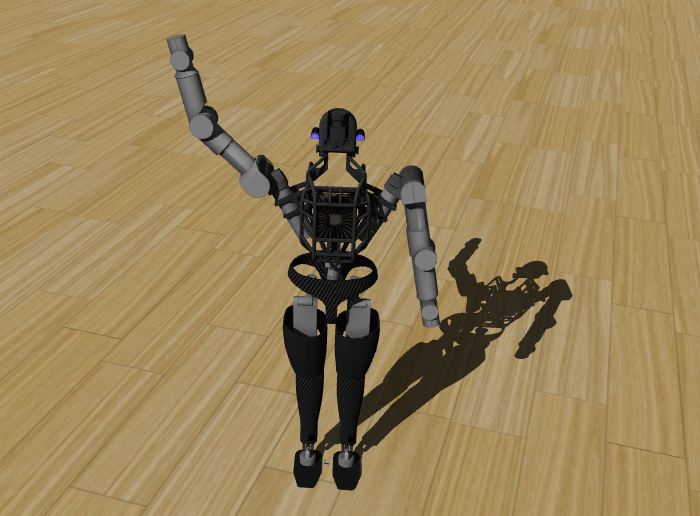
Instead of designing every behavior only around a laboratory demonstration, the team could measure progress against work that exists inside a factory.
That is how part sequencing became important.
The task looks simple from a distance.
Pick a specific automotive component from one container.
Carry it.
Place it into another rack or dolly in the required sequence.
But the robot has to perceive the correct part, navigate around fixtures, choose a grasp, maintain balance, move the object and complete the placement.
A commercial application turns many research capabilities into one repeatable workflow.
Part Sequencing Became the First Industrial Application
Boston Dynamics chose automotive part sequencing as Atlas’ first major industrial application.
In a mixed-model vehicle plant, parts arrive from suppliers in containers.
Those components need to be reorganized into the exact sequence required by the assembly line.
Atlas has been trained to move parts such as engine covers from supplier containers into sequencing dollies.
Boston Dynamics uses the task because it combines several capabilities in one workflow.
Vision identifies bins and fixtures.
Manipulation selects and grasps the component.
Whole-body control keeps the robot balanced while reaching and carrying.
Navigation moves the robot through the workspace.
State estimation tracks both the robot and the object.
The sequencing task therefore becomes a practical integration test.
One successful pick is useful.
A production workflow needs the complete loop to repeat across many parts and changing conditions.
That is the difference between demonstrating a behavior and building an industrial application.
The 2025 Hyundai Pilot Put Atlas Into a Customer Factory
Boston Dynamics moved the electric Atlas into Hyundai Motor Group Metaplant America in Georgia for field testing in 2025.
Hyundai describes the pilot as part of the robot’s path toward commercialization.
Atlas repeatedly performed sequencing tasks involving automotive parts and racks.
Boston Dynamics says the deployment helped the team test application readiness outside the lab.
That matters because a customer factory has its own geometry, fixtures, lighting, schedules and operating systems.
The robot has to work inside that environment rather than a workspace designed only for robotics research.
Field testing also produces a different kind of engineering feedback.
The team can see which parts of perception need refinement.
Which grasps appear repeatedly.
How the robot interacts with real containers.
How operators communicate work.
How maintenance fits around production.
The factory becomes part of the development process.
The Product Version Is Built Around Repeatable Manufacturing
A product robot also has to be manufacturable.
Boston Dynamics says the 2026 Atlas product version reduces the number of unique parts and uses components designed for compatibility with automotive supply chains.
That is a product-engineering decision.
Research hardware can evolve quickly between builds.
Production hardware needs a more controlled bill of materials.
Parts have to be sourced.
Assemblies need repeatable processes.
Quality checks need stable specifications.
Replacement components need to be available.
Hyundai Motor Group brings another layer through its manufacturing network.
Hyundai says it plans to use its mass-production capabilities to support the expansion of Atlas production and deployment.
The robot therefore sits inside a wider industrial system.
Boston Dynamics develops the humanoid.
Hyundai contributes manufacturing scale and customer environments.
The product architecture has to work across both.
Atlas Has 56 Degrees of Freedom and Continuous Joint Rotation
The product version of Atlas uses 56 degrees of freedom.
Boston Dynamics also describes its joint range as continuous.
That gives the robot movement options beyond directly copying human anatomy.
A humanoid shape helps Atlas work in spaces designed around people.
But the robot does not have to reproduce every human mechanical limitation.
The joints can rotate through ranges selected for industrial manipulation.
Boston Dynamics has shown Atlas turning its body while carrying objects and using orientations that let the robot approach a task from different directions.
This matters inside a factory.
A rack may be behind the robot.
A container may be low.
A part may require a different grasp angle.
The robot’s morphology gives the planner more ways to solve the same physical task.
The product specification therefore connects mechanical design directly to application flexibility.
The Product Hardware Is Sized Around Industrial Work
Boston Dynamics lists Atlas at 1.9 meters tall and 90 kilograms.
Its current specification gives an instantaneous payload capacity of 50 kilograms, a sustained capacity of 30 kilograms and a one-handed capacity of 20 kilograms.
Reach is listed at 2.3 meters.
Those numbers define the physical envelope of the robot.
They tell an application engineer what kinds of bins, shelves, parts and workstations can be considered.
The robot also includes tactile sensing in its fingers and palm together with a 360-degree camera view.
That connects physical manipulation with perception.
The hands interact with the object.
The vision system models the surrounding workspace.
The body provides the reach and payload.
An industrial platform needs all three layers to be specified because the task is defined by the complete mechanical system, not one actuator.
Autonomous Battery Swapping Turns Power Into a Workflow
Battery operation becomes part of deployment when a robot is expected to work across shifts.
Boston Dynamics lists four hours of typical battery life and two hours under heavy lifting.
Atlas can autonomously navigate to a charging station and replace its own battery.
The current specification lists an autonomous battery-swap time of about three minutes and a charge time of 1.5 hours.
That changes the power workflow.
An operator does not have to manually open the robot and replace a pack every time energy runs low.
Battery replacement becomes another autonomous task.
The robot can pause its assigned work, move to the station, exchange the battery and return.
That is a product feature rather than a locomotion feature.
It exists because industrial operation includes energy management, shift scheduling and fleet availability.
The robot has to manage its own supporting infrastructure as part of the work cycle.
Serviceability Becomes a First-Class Design Requirement
Commercial robots also need a maintenance model.
Boston Dynamics lists Atlas components as modular and field replaceable.
The company says limbs can be replaced in the field and plans customer self-repair certification paths.
That changes the way the hardware is designed.
A research robot can return to the engineering team for extensive work.
A deployed robot needs maintenance that fits the customer’s operating environment.
Components need defined replacement procedures.
Technicians need access.
System monitoring needs to identify what requires service.
Replacement parts need known interfaces.
Boston Dynamics also gives Atlas an IP67 rating and an operating-temperature range from minus 20 to 40 degrees Celsius.
Those specifications describe the environment the product is designed to operate within.
The product version is therefore defined not only by what it can do when everything is running.
It is also defined by how it is maintained between tasks.
Safety Systems Are Integrated Into the Product Architecture
Atlas is designed for workspaces where people may also be present.
Boston Dynamics lists human detection and fenceless guarding in its current product specification.
The company describes an onboard safety system that detects people and vehicles around the robot.
If a person enters a defined nearby area, the robot can pause and wait.
Padding and reduced pinch-point exposure are also part of the current product design.
These are product-level systems because deployment depends on the complete operating environment.
The autonomous behavior decides where the robot wants to move.
The safety layer monitors the surrounding workspace.
The factory defines the broader process around the robot.
That creates several levels of control working together.
The robot is not only a machine that can walk and manipulate.
It is a machine being designed to operate as part of an industrial workplace.
Orbit Connects Atlas to Enterprise Systems
A factory robot also needs software above the robot itself.
Boston Dynamics uses Orbit as its fleet and enterprise-management layer.
Orbit can connect robotics workflows to Manufacturing Execution Systems, Warehouse Management Systems and other systems of record.
That link is important.
A factory does not assign work only through a person standing next to the robot.
Orders already exist inside digital systems.
Inventory has identifiers.
Production has schedules.
Parts can be tracked through barcodes and RFID.
Boston Dynamics lists barcode scanning and RFID as Atlas workflow integrations.
Orbit provides the management layer around those operations.
It can assign work, monitor performance and connect the robot fleet to the wider enterprise process.
That turns Atlas from an isolated autonomous machine into one endpoint inside a software-defined factory workflow.
One Learned Skill Can Be Distributed Across a Fleet
Boston Dynamics also treats learned robot behavior as a fleet asset.
The company says that when one Atlas learns a new skill, that task can be deployed across the wider Atlas fleet.
That changes the economics of training.
The physical work happens locally.
The learned behavior can become reusable software.
A robot can be trained for a sequencing operation.
Once the behavior is validated, the same capability can be delivered to other compatible Atlas systems.
The exact deployment still depends on the application, environment and integration.
But the model of improvement is no longer one robot at a time.
The fleet can share behavior updates.
That makes Atlas closer to an enterprise software platform.
Hardware performs the task.
Software defines the learned capability.
Fleet management distributes and monitors it.
This is one of the clearest ways the product version moves beyond the identity of one humanoid robot.
Reinforcement Learning Is Moving From Research Into Product Skills
Atlas behavior development now uses reinforcement learning, teleoperation data and learned behavior models as part of the product pipeline.
Boston Dynamics and the Robotics & AI Institute formed a joint reinforcement-learning program in 2025 for the electric Atlas.
Boston Dynamics also describes using reinforcement learning in simulation and from teleoperated demonstrations for factory behaviors.
The company has applied these methods to walking, manipulation, carrying and full-body movement.
The important change is where those methods end up.
They are not only research outputs.
They feed skills intended for industrial applications.
A policy trained in simulation can become part of a sequencing behavior.
A teleoperated demonstration can provide data for manipulation.
A whole-body controller can support lifting.
The research pipeline becomes a production-skill pipeline.
That is another layer required for a humanoid platform that is expected to learn new physical tasks over time.
Google DeepMind Adds Foundation Models to the Atlas Roadmap
Boston Dynamics and Google DeepMind announced a new AI partnership at CES 2026.
The two teams plan to combine Gemini Robotics foundation models with the new Atlas fleet.
The stated focus is industrial work, beginning with manufacturing.
This adds another software layer to the product roadmap.
Boston Dynamics already has locomotion, whole-body control, manipulation, perception and application-specific policies.
Foundation models can add broader reasoning and generalization capabilities above those systems.
The partnership is research work, so the exact production behaviors will develop over time.
But the architecture is clear.
Atlas is not being designed around one fixed set of hard-coded tasks.
The robot platform is expected to receive new behaviors through learning systems and foundation models.
That gives the product a software roadmap alongside its hardware roadmap.
Hyundai Is Building a Training and Validation Pipeline Around Atlas
Hyundai is also building infrastructure around the robot.
Its Robotics Metaplant Application Center, or RMAC, opened in the United States in 2026.
Hyundai describes RMAC as a site for training manufacturing AI robots, collecting real-world data, testing and verification before production deployment.
The Group says Atlas robots trained there are planned to begin sequencing work at Hyundai Motor Group Metaplant America from 2028, with more complex manufacturing operations targeted later.
Those dates are Hyundai’s roadmap.
They show the structure behind the rollout.
Train.
Validate.
Deploy.
Collect operational data.
Retrain.
Expand the task set.
The robot is only one piece.
The training center, factory, software systems and fleet-management process form the wider industrial platform around it.
The 2026 Product Version Has Already Moved Into Public Deployment
Atlas also made a public appearance at the 2026 FIFA World Cup.
Hyundai used the product robot during a live Round of 16 match environment in July.
Atlas performed football-inspired movements and delivered the ceremonial match ball.
Boston Dynamics says the same reinforcement-learning and whole-body-control methods used for that public performance are related to how the team develops industrial robot behaviors.
The event itself is not a factory task.
What matters is the deployment process.
The robot had to operate outside the lab.
It had to execute a defined sequence in a live environment.
The team tested the behavior in real-world conditions before the event.
Boston Dynamics describes that approach as part of the transition from prototype demonstrations toward production systems that need repeatable behavior.
Public deployment becomes another validation environment for the product architecture.
Atlas Is Becoming an Industrial Platform, Not Just a Humanoid Robot
The change in Atlas becomes clearer when all of these layers are placed together.
The electric robot provides the body.
Fifty-six degrees of freedom provide movement.
Tactile sensing and 360-degree vision provide physical awareness.
Autonomous battery swapping manages energy.
Modular field-replaceable components create a service model.
Safety systems support shared workplaces.
Orbit connects the fleet to MES, WMS, barcode and RFID workflows.
Learned behaviors can move across multiple robots.
Reinforcement learning and behavior models create new physical skills.
Google DeepMind adds foundation-model research.
Hyundai provides customer factories, RMAC training infrastructure and a deployment roadmap.
Boston Dynamics is manufacturing the product version now.
That is a much larger system than one humanoid completing one task.
Atlas is becoming a hardware platform, software platform and fleet platform at the same time.
The research robot proved what the body could learn.
The industrial platform has to make those capabilities deployable, maintainable and repeatable.
That is the upgrade.