
01—Reasoning is moving onto the device
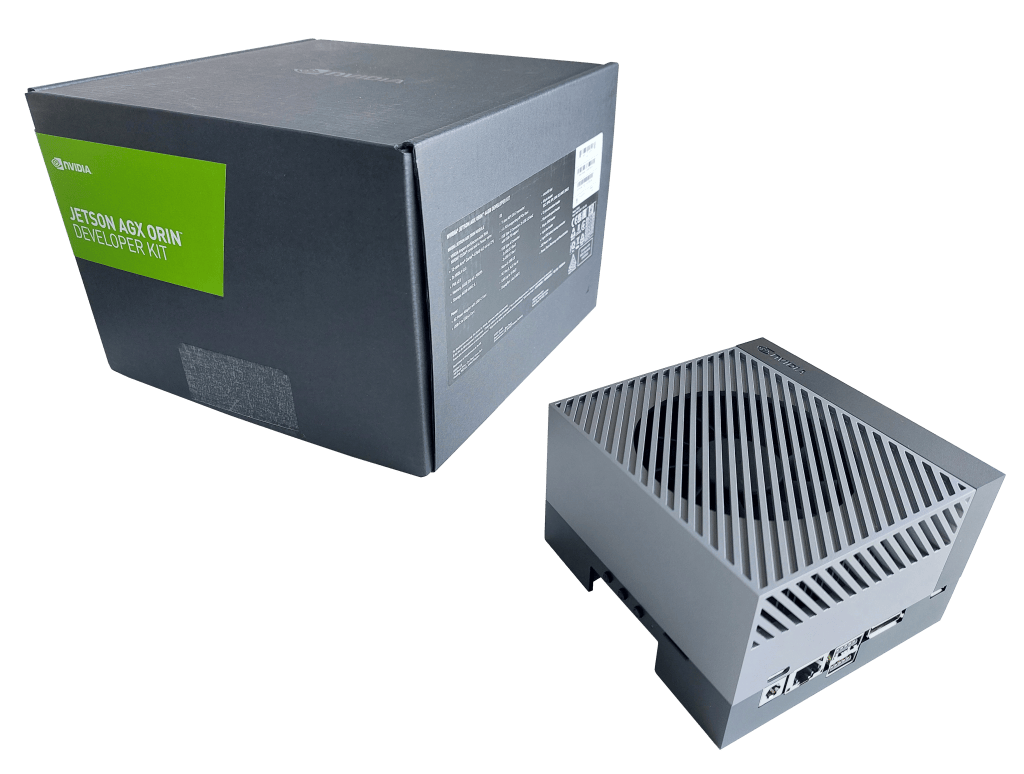
NVIDIA’s latest Jetson update is about a shift that would have sounded much harder a year ago: running multi-step reasoning and agentic AI locally on edge hardware.
In a technical post published September 4, NVIDIA says compact open models released through 2026 have reached a point where Jetson can run capabilities that previously belonged to much larger systems. The company uses Nemotron 3.5 Lightning and Qwen3.8-27B to show what that looks like in practice.
The goal is not just a local chatbot. NVIDIA is talking about agents that can reason through several steps, call tools, and keep working inside machines and edge applications without sending every inference request somewhere else.
That gives the story a very different feel from another model launch. The model is becoming part of the device itself.
02—Nemotron and Qwen take two different routes
The two models in NVIDIA’s test are built differently, which makes the comparison useful.
Nemotron 3.5 Lightning is a mixture-of-experts model with 30 billion total parameters, but only about 3 billion are active for each token. That lets the model keep a larger total parameter pool while reducing the amount of compute used on any one step.
Qwen3.8-27B takes the dense route. All 27 billion parameters participate during inference.
NVIDIA does not present one architecture as the universal answer. The point is that Jetson can now host reasoning-oriented models from more than one design family, and each one can be tuned around the workload it is meant to run.
For developers building local agents, the model choice is starting to look less like “what can fit?” and more like “which architecture fits this application best?”
For an agent, that difference can shape the entire deployment. A sparse mixture-of-experts design can keep a broad model capacity while activating a smaller slice of the network for each token. A dense model spends compute across the full network every time. Jetson now supports both paths, which gives developers more room to balance responsiveness, model behavior, and the kind of reasoning their application needs.
03—NVFP4 cuts the work of each inference pass
The first major optimization is NVFP4 quantization.
Instead of keeping model operations at a higher numerical precision such as BF16, NVFP4 uses a much smaller 4-bit representation on supported Jetson hardware. That reduces the memory footprint and the amount of work needed for each inference pass.
For edge devices, that is a big lever. Models that look heavy on paper become much more practical when the runtime can move less data and use lower-precision tensor operations efficiently.
NVIDIA pairs that quantization with prebuilt checkpoints and optimized serving through vLLM. The Jetson AI Lab model catalog already lists Nemotron 3.5 Lightning and Qwen3.8-27B with platform-specific run options, so this is not only a benchmark recipe hidden inside a research post.
Developers can start from an existing optimized configuration and then measure it against the prompts their own application will actually use.
04—Speculative decoding adds another layer of speed
Quantization is only half of NVIDIA’s performance story.
The second technique is speculative decoding. A smaller draft process proposes several tokens ahead of time, and the main model verifies them. When enough of those proposed tokens are accepted, the system can produce multiple output tokens for the cost of fewer full-model verification steps.
NVIDIA tested several speculative-decoding methods rather than assuming one would win everywhere. Nemotron 3.5 Lightning performed best with DSpark in the company’s tests, while Qwen3.8-27B performed best with DFlash2.
That distinction is useful. The fastest setup is not simply “turn on speculative decoding.” The draft method and checkpoint have to match the model and the workload.
Combined with NVFP4, speculative decoding pushed the best Jetson configuration in NVIDIA’s tests to as much as 6.28× the decode throughput of the BF16 baseline.
05—That 6.28× number is a peak, not a universal constant
The headline number is strong, but NVIDIA’s own measurements make the more useful point: inference speed depends on what the agent is doing.
The company kept the fastest speculative-decoding configuration for each model and tested writing, reasoning, summarization, and retrieval-augmented generation workloads. Throughput moved between categories even when the model and decoding method stayed the same.
Nemotron 3.5 Lightning with DSpark ranged from 123.01 to 138.02 output tokens per second. Qwen3.8-27B with DFlash2 ranged from 27.69 to 34.44 output tokens per second.
That is why NVIDIA recommends testing with representative prompts instead of treating a general benchmark as the final answer.
For an edge agent, the practical target is not the largest number on a chart. It is the configuration that stays fast on the exact mix of reasoning, retrieval, tool use, and response generation the device will perform.
06—Local reasoning changes what edge systems can do
Once reasoning models can stay on the device, the list of possible applications gets much more interesting.
NVIDIA points to in-cab assistants, real-time anomaly detection, and robots operating in remote or demanding environments. These are systems where the AI is close to the sensors, machines, and people it is helping.
A local agent can inspect incoming data, reason through a situation, and act without turning every step into a round trip to a remote service. That is especially useful when the agent is part of a physical workflow rather than a browser tab.
The same idea applies to robotics. A robot that can run a reasoning model onboard has a different relationship with its environment: perception, planning, tool use, and response can stay closer to the machine.
Jetson has been moving in that direction for years. The difference now is the kind of model NVIDIA says can fit into that local loop.
The edge setting also changes what counts as useful latency. A machine reading cameras, microphones, telemetry, or industrial sensors may need to reason close to the moment the data arrives. Keeping the model on the same system means the AI can sit directly inside that loop. The result can be an assistant that responds to the current state of a vehicle, a robot that reasons over what its sensors are seeing, or an industrial agent that combines local signals before deciding what to do next.
07—Jetson AI Lab is turning the research into runnable recipes
NVIDIA is also making the deployment path unusually concrete.
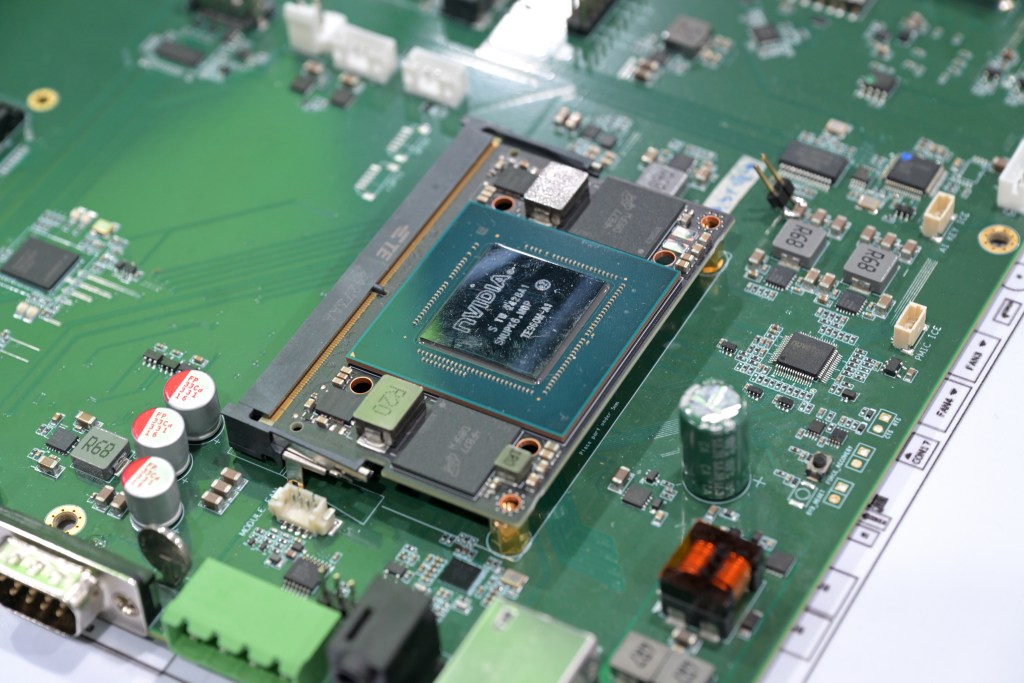
The Jetson AI Lab model catalog lists supported models by Jetson platform and inference engine, with quick-start commands for models including Nemotron 3.5 Lightning and Qwen3.8-27B. Developers can see which Jetson modules are supported, choose an inference runtime, and generate a launch command from the page.
That closes an important gap between a performance blog and something a developer can reproduce.
The technical post also links to tutorials for running LLMs and VLMs on Jetson, benchmarking generative AI models, and getting started with speculative decoding. The message is clear: NVIDIA wants local reasoning to be a deployable developer workflow, not a one-off demonstration.
As the model catalog grows, the edge is starting to look less like a place where only tiny models run and more like another serious target for agentic AI.
08—The Upgrade Feeling
The most interesting part of NVIDIA’s Jetson update is not that one benchmark got faster.
It is that local reasoning is starting to feel normal.
Nemotron 3.5 Lightning can activate only a fraction of its total parameters per token. Qwen3.8-27B shows a dense model can live in the same edge conversation. NVFP4 cuts the work of each pass, speculative decoding pushes more tokens through, and Jetson AI Lab turns those pieces into something developers can actually run.
That combination changes the shape of the edge. Instead of treating the device as a sensor that hands intelligence off somewhere else, the device can increasingly keep the reasoning loop with it.
For robotics, industrial systems, and local AI agents, that is a much bigger upgrade than another raw model score.